If you’ve ever wondered why your dog barely licks you while your neighbor’s dog turns every greeting into a face bath, you’re not alone. Some dog breeds tend to lick less than others, but no breed can guarantee a completely lick-free companion. Licking is shaped by personality, training, bonding style, anxiety levels, and daily habits just as much as it’s shaped by genetics.
Dog breeds that tend to lick less include the Basenji, Shiba Inu, Chow Chow, Akita, and Great Pyrenees. These breeds often have independent or reserved temperaments, though individual personality still plays a major role in how much any dog licks
This guide walks through breeds that are often described as less prone to licking, explains why licking happens in the first place, and helps you figure out what to look for if you want a dog that shows love in quieter ways.
What Does It Mean When a Dog Does Not Lick?
A dog that doesn’t lick much isn’t a cold or unaffectionate dog. Licking is just one form of communication among many, and plenty of dogs skip it almost entirely without loving their owners any less.
Dogs show attachment in other ways, including
- Staying close by during quiet moments
- Following their owner from room to room
- Leaning their body weight against a person
- Bringing over a toy as a kind of invitation
- Relaxing fully belly up or sprawled out around family
- Seeking out physical touch like a head resting on a lap
- Holding steady eye contact
A dog that prefers these behaviors over licking is simply expressing affection in its own language.
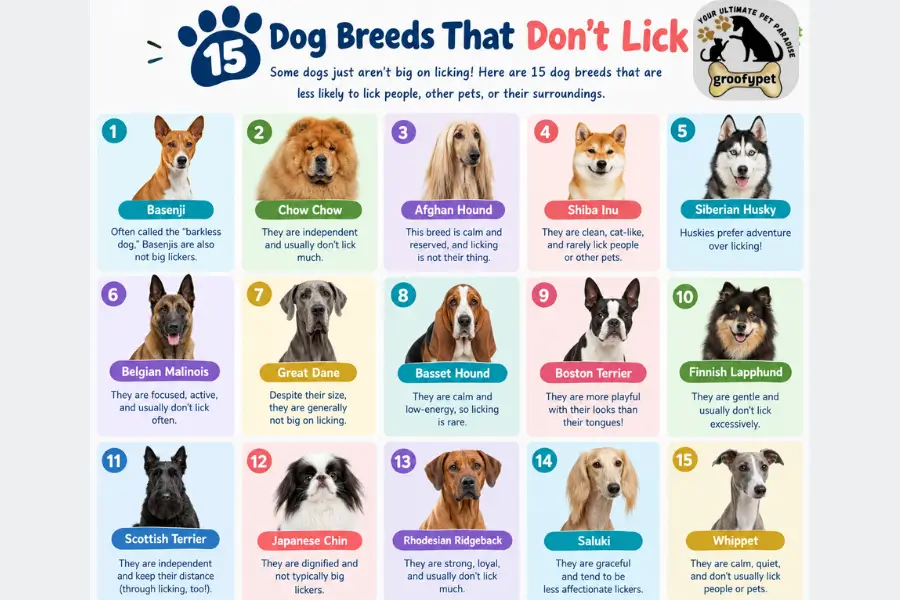
15 Dog Breeds That Tend to Lick Less
These breeds are commonly associated with independent nature, reserved temperament, or a more dignified, self-contained personality. That said, individual dogs vary, and a dog’s upbringing, socialization, and bond with its owner still play a major role in whether it becomes a frequent licker.
1. Basenji
Temperament: Basenjis are known for a cat-like independence and an almost aloof demeanor. They’re intelligent, alert, and often described as choosing their own moments to engage.
Licking Behavior: Basenjis are frequently listed among dog breeds that don’t lick much, largely because of their reserved, self-directed personality.
Affection Style: Expect quiet companionship rather than constant physical contact. A Basenji shows love by staying near you, not smothering you.
Best For: Owners who appreciate a low-maintenance emotional style and don’t need constant physical affirmation.
2. Shiba Inu
Temperament: Often compared to cats in behavior, Shiba Inus are confident, clean, and fiercely independent.
Licking Behavior: Shiba Inus are one of the breeds that don’t lick your face on command; they tend to be selective about physical affection.
Affection Style: A Shiba typically shows attachment through proximity and calm companionship rather than kisses.
Best For: People who want a dog with personality but don’t need a lot of physical clinginess.
3. Chow Chow
Temperament: Dignified, calm, and somewhat reserved with strangers, though deeply loyal to their families.
Licking Behavior: Chow Chows are often grouped with low-licking dog breeds thanks to their composed, undemonstrative nature.
Affection Style: Loyalty shows up as quiet closeness rather than exuberant greetings.
Best For: Owners who want a devoted dog without excessive neediness.
4. Afghan Hound
Temperament: Elegant, independent, and a little aloof Afghan Hounds carry themselves with a regal air.
Licking Behavior: This breed tends to lick less, fitting the pattern of many sighthounds that show restrained affection.
Affection Style: Gentle presence and calm companionship define how an Afghan Hound bonds.
Best For: Owners drawn to independent dog breeds with a graceful, low-key temperament.
5. Greyhound
Temperament: Surprisingly gentle and laid-back despite their racing background, Greyhounds are often called “45-mph couch potatoes.”
Licking Behavior: Many Greyhounds are not big lickers, preferring to lean or snuggle instead.
Affection Style: Leaning against you, resting a head on your knee, or curling up nearby are typical.
Best For: Calm households looking for a quiet, affectionate dog that doesn’t require constant physical interaction.
6. Whippet
Temperament: Gentle, sweet-natured, and sensitive, Whippets are the smaller cousin of the Greyhound with a similarly relaxed personality.
Licking Behavior: Whippets often show love through cuddling rather than licking.
Affection Style: They’re known for burrowing under blankets or pressing close to their favorite person.
Best For: Owners who want physical closeness without the face-licking.
7. Borzoi
Temperament: Quiet, sensitive, and somewhat cat-like in independence, Borzois are gentle giants with a calm household presence.
Licking Behavior: This breed tends to show less licking behavior, staying composed even during excited moments.
Affection Style: Subtle gestures—a nudge, a lean, sustained eye contact replace overt licking.
Best For: Owners who like a serene, elegant dog that isn’t demonstrative.
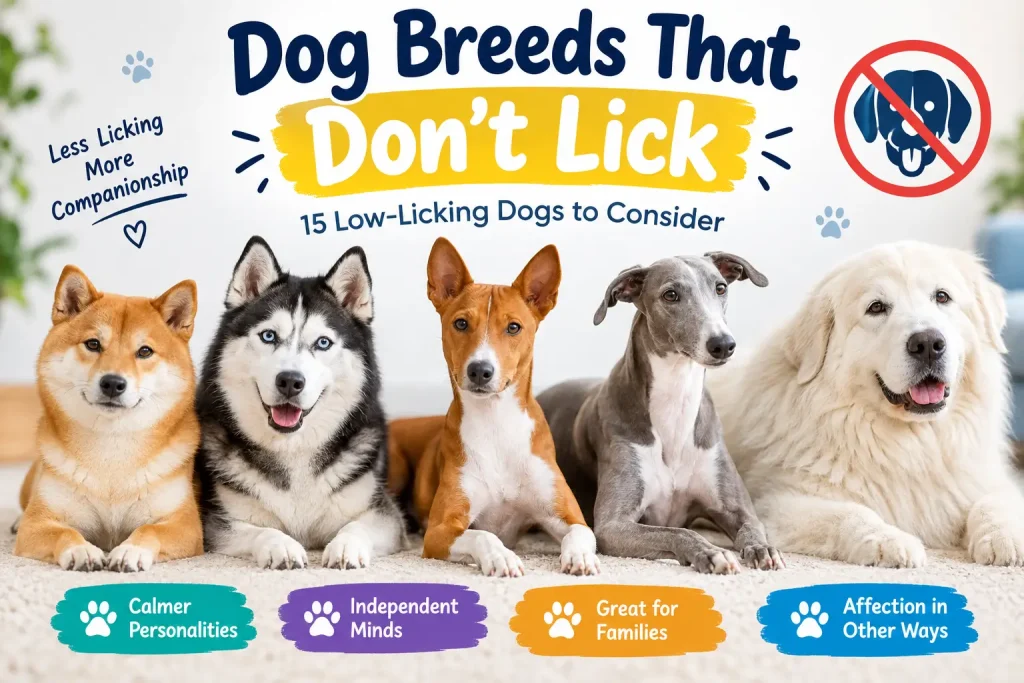
Independent dog breed known for licking less, sitting calmly outdoors
Also Read : Dog Breeds with White Tipped Tails: The Sweet Guide for Dog Parents!
8. Saluki
Temperament: Ancient, dignified, and reserved, especially with people outside the immediate family.
Licking Behavior: Salukis are often noted as dogs that don’t lick people frequently, staying more restrained even when comfortable.
Affection Style: Deep loyalty expressed through quiet devotion rather than physical exuberance.
Best For: Experienced owners who value a calm, independent companion.
9. Alaskan Malamute
Temperament: A classic Arctic working breed with a strong, independent streak shaped by generations of pulling sleds rather than snuggling on laps.
Licking Behavior: Malamutes are frequently cited as breeds that lick less, a trait tied to their working-dog history and self-sufficient nature.
Affection Style: Big, physical presence, leaning, playful nudging without excessive licking.
Best For: Active owners who want a loyal, independent dog with a strong personality.
10. Siberian Husky
Temperament: Energetic and social with people, but independent-minded and historically bred for stamina and teamwork rather than lap time.
Licking Behavior: Huskies are commonly mentioned in discussions of dog breeds that don’t lick much, though individual dogs vary widely.
Affection Style: Huskies often “talk” through vocalizations and playful body language instead of licking.
Best For: Owners who enjoy an expressive, vocal dog that shows love in unconventional ways.
11. Akita
Temperament: Bold, dignified, and protective, Akitas carry a reserved confidence that shows especially around unfamiliar people.
Licking Behavior: Akitas are frequently described as having a lower licking tendency, consistent with their composed, self-assured temperament.
Affection Style: Fierce loyalty and quiet watchfulness over family members.
Best For: Experienced owners looking for a devoted, low-licking guardian breed.
12. Shar-Pei
Temperament: Independent, calm, and a little stubborn, Shar-Peis form strong bonds but aren’t typically clingy.
Licking Behavior: This breed tends to be among the dogs that are not big lickers, staying composed even during affectionate moments.
Affection Style: Steady, undemonstrative companionship.
Best For: Owners who want loyalty without constant physical affection.
13. Scottish Terrier
Temperament: Feisty, dignified, and famously independent Scotties have a reputation for doing things on their own terms.
Licking Behavior: Scottish Terriers are often grouped with calm dog breeds that show less licking behavior.
Affection Style: Expect a confident companion who shows love through loyalty and presence rather than kisses.
Best For: Owners who appreciate a strong-willed, independent personality.
14. Dachshund
Temperament: Dachshunds vary a lot individually, but many lean toward being independent dogs with a stubborn streak alongside their playful side.
Licking Behavior: While some Dachshunds do lick, many owners report their dogs falling into the low to moderate licking category.
Affection Style: Burrowing into blankets, following owners closely, and demanding lap time are common.
Best For: Owners who want a small dog with a big personality that isn’t overly licky.
15. Great Pyrenees
Temperament: Calm, protective, and independent, this livestock guardian breed was developed to watch over flocks, a job that didn’t reward constant face-licking.
Licking Behavior: Great Pyrenees dogs are often considered breeds that don’t lick much, reflecting their guardian-dog background and self-directed nature.
Affection Style: Gentle, steady presence and quiet watchfulness over their household.
Best For: Owners with space and patience for a large, calm, independent guardian dog.
Also Read : Labradoodle Beagle Mix: A Loving Blend of Fun and Loyalty!
Quick Comparison Table
| Dog Breed | Licking Tendency | Personality | Affection Style | Activity Level |
|---|---|---|---|---|
| Basenji | Low | Independent, alert | Quiet closeness | Moderate |
| Shiba Inu | Low | Confident, cat-like | Selective affection | Moderate |
| Chow Chow | Low | Dignified, reserved | Loyal presence | Low to moderate |
| Afghan Hound | Low | Elegant, aloof | Calm companionship | Moderate |
| Greyhound | Low | Gentle, laid-back | Leaning, snuggling | Low to moderate |
| Whippet | Low to moderate | Sweet, sensitive | Cuddling | Moderate |
| Borzoi | Low | Quiet, sensitive | Subtle gestures | Moderate |
| Saluki | Low | Reserved, dignified | Quiet devotion | Moderate |
| Alaskan Malamute | Low | Independent, strong | Physical presence | High |
| Siberian Husky | Low to moderate | Energetic, vocal | Playful body language | High |
| Akita | Low | Bold, protective | Watchful loyalty | Moderate |
| Shar-Pei | Low | Independent, calm | Steady companionship | Low to moderate |
| Scottish Terrier | Low to moderate | Feisty, independent | Confident presence | Moderate |
| Dachshund | Low to moderate | Playful, stubborn | Close following | Moderate |
| Great Pyrenees | Low | Calm, protective | Quiet watchfulness | Low to moderate |
Why Some Dogs Lick Less
Several factors combine to shape a dog’s licking habits, and breed is only one piece of the puzzle:
- Genetics and breed tendencies — some breeds carry a stronger independent streak bred into them over generations.
- Individual personality — just like people, dogs vary even within the same litter.
- Socialization — early exposure to gentle handling and calm affection shapes adult behavior.
- Training — dogs that were never rewarded for licking often don’t develop the habit.
- Previous experiences — a rescue dog’s past can influence how it expresses affection.
- Attention-seeking habits — dogs that get attention other ways may not rely on licking.
- Stress and anxiety — some dogs lick more when anxious, so a calm dog may naturally lick less.
- Age — puppies often lick more than mature, settled adult dogs.
- Environment — a calm household can reduce excitement-driven licking.
Why Do Some Dogs Lick So Much?
On the flip side, frequent licking usually comes down to a handful of common drivers:
- Showing affection — for many dogs, licking is simply their version of a hug.
- Seeking attention — if licking gets a reaction, dogs repeat it.
- Taste and smell — salt on skin or lingering food scents can draw a curious tongue.
- Habit — some dogs pick up the behavior early and never grow out of it.
- Anxiety — licking can be self-soothing during stress.
- Excitement — greeting rituals often trigger a burst of licking.
- Communication — puppies lick their mothers, and some dogs carry this instinct into adulthood as a way to “talk.”
Can You Train a Dog Not to Lick?
Yes, licking can be reduced with consistent, positive training. Try these steps:
- Avoid rewarding unwanted licking with attention — even scolding can feel like a reward to an attention-seeking dog.
- Reward calm behavior — praise and treat your dog when all four paws are on the ground and the mouth stays closed.
- Teach a “leave it” or similar cue — this gives your dog a clear alternative behavior.
- Redirect licking toward a toy or activity — a chew toy nearby can interrupt the habit before it starts.
- Ask visitors to avoid encouraging licking — consistency across everyone your dog interacts with matters.
- Stay consistent — training only works if the whole household follows the same approach.
Avoid punishment, yelling, or physical correction. These methods can damage trust and often make anxious licking worse rather than better.
Does a Dog That Does Not Lick Love You?
Absolutely. Licking is just one possible way dogs express connection, not a requirement for love. A dog that leans on you, sleeps near you, or simply relaxes in your presence is showing just as much attachment as one that licks constantly it’s simply speaking a different dialect of dog body language.
Are Independent Dog Breeds Less Affectionate?
Not necessarily. Independence and affection are different traits. A dog can enjoy personal space, prefer to nap alone, or dislike being smothered while still forming a deep, loyal bond with its owner. Independent dog breeds often show love through steady companionship and quiet presence rather than constant physical contact. This is a difference in style, not a difference in depth of feeling.
How to Choose a Dog If You Dislike Licking
Breed tendencies are a helpful starting point, but they’re not a guarantee. Before choosing a dog:
- Meet the individual dog before adoption whenever possible.
- Ask the breeder or shelter staff about the dog’s specific behavior and licking habits.
- Observe how the dog interacts with people during a visit does it seek face-to-face contact or keep some distance?
- Discuss temperament rather than relying only on breed stereotypes, since personality varies within every breed.
- Consider an adult dog’s established personality with adult dogs, what you see is largely what you get, unlike puppies whose habits are still forming.
Frequently Asked Questions
What dog breeds don’t lick much?
Breeds often described as low-licking dog breeds include the Basenji, Shiba Inu, Chow Chow, Akita, Great Pyrenees, and several sighthounds like the Greyhound and Afghan Hound. These breeds tend to have independent or reserved temperaments, though individual dogs still vary.
What is the least affectionate dog breed?
No breed is truly unaffectionate; some, like the Basenji or Shiba Inu, simply show affection in quieter, less physical ways. They may prefer proximity and calm companionship over kisses or cuddling.
Are Basenjis known for licking?
Basenjis are generally not known as frequent lickers. Their independent, cat-like personality means they often express attachment through presence rather than physical affection like licking.
Do Shiba Inus lick their owners?
Some Shiba Inus lick occasionally, but as a breed they’re often selective about physical affection. Many owners describe their Shiba as more reserved with licking compared to breeds like Labradors or Golden Retrievers.
Why doesn’t my dog lick me?
Your dog may simply have a personality that favors other ways of showing affection, or it may not have picked up the habit early in life. This isn’t a sign of a weaker bond; many dogs express love through closeness, eye contact, or leaning rather than licking.
Can you teach a dog not to lick people?
Yes. Consistent positive training, rewarding calm behavior, redirecting to a toy, and avoiding attention for unwanted licking can reduce the habit over time in most dogs.
Does a dog licking you mean it loves you?
Licking can be one sign of affection, but it’s not the only one, and its absence doesn’t mean a lack of love. Dogs communicate attachment through a wide range of behaviors beyond licking.
Are independent dogs less affectionate?
No. Independent dogs can be just as loyal and loving as more demonstrative breeds; they simply express that bond through calmer, less physical behaviors.
Key Takeaways
- Some breeds, like the Basenji, Shiba Inu, and Akita, tend to lick less due to independent or reserved temperaments.
- No breed can guarantee zero licking; individual personality plays a major role.
- Dogs show affection in many ways beyond licking, including leaning, following, and eye contact.
- Licking behavior is shaped by genetics, training, socialization, and environment together.
- Positive training methods can help reduce unwanted licking in any breed.
- Independence and affection are not opposites a calm dog can still be deeply bonded to its owner.
- Meeting an individual dog before adoption is the best way to judge its actual licking habits.
Final Thoughts
Breed tendencies can help you narrow your search if you’re looking for a dog breed that doesn’t lick much, but they’re only a starting point. A dog’s individual personality, upbringing, and bond with its family will always matter more than its coat color, breed name, or general reputation. Whether you choose a reserved Basenji or a snuggly Whippet, the real key to a lower-licking companion is getting to know the dog as an individual, not just as a breed label.
How to Raise a Cat and Dog Together with Love and Care?
Do Raccoons Eat Dog Poop? Surprising Science Behind This Dirty Behavior!