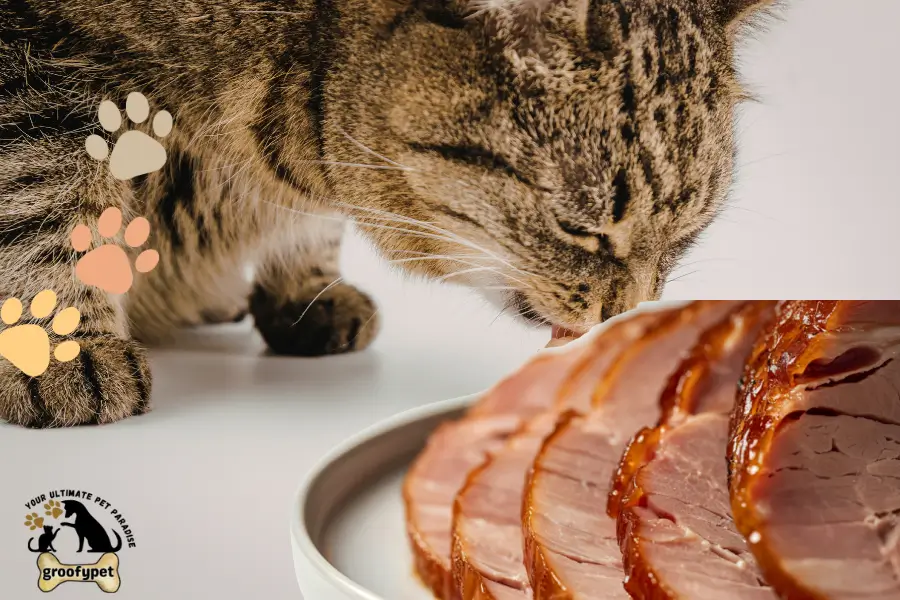
Cats are curious creatures and often want to taste what their owners eat. Many people wonder if can cats eat honey ham safely. Honey ham is a sweet cooked pork product that humans enjoy but it may not be ideal for cats.
Cats have different nutritional needs than humans and cannot process sugar or too much salt well. Feeding honey ham regularly can harm your cat’s kidneys and digestive system. Sometimes giving a tiny piece as a rare treat may not be dangerous.
This article will explain all the risks benefits safe alternatives and tips to feed ham to cats. By the end you will know how to keep your cat healthy while occasionally sharing small treats.
Unlike plain cooked chicken or turkey honey ham is processed and may include chemical additives. The fat content is also higher than other meats which can lead to obesity in cats if eaten often. People feed honey ham to their cats because it smells appealing and is soft to chew.
However understanding its ingredients is important before offering any to a cat. Honey ham is not naturally part of a cat’s diet and should only be given cautiously.
Can cats eat honey ham?
Cats can eat honey ham in very small amounts but it is not healthy for them. Honey ham contains sugar salt and sometimes preservatives that cats do not need. Too much salt can damage their kidneys or make them thirsty all the time.
Honey or sugar can lead to weight gain and digestive problems in cats. If you want to give honey ham it should be plain and cut into tiny pieces. Only offer it as an occasional treat never as a main meal. Cats need high-protein food without sugar for proper growth and energy.
Feeding honey ham frequently can cause long-term health issues. Remember cats cannot digest processed meats like humans can so moderation is key.
Risks of feeding honey ham to cats
Can cats eat honey ham ?Feeding honey ham to cats may seem harmless but it has several health risks. Cats are sensitive to processed foods, sugar, and high salt content. Even small amounts occasionally can cause problems if they are repeated too often.
This section explains major risks in detail so owners can make informed choices.
1. High salt
Honey ham has a lot of salt which cats cannot handle in large amounts. Too much salt can make cats thirsty constantly. High salt intake can damage kidneys and cause urinary problems. Cats that already eat commercial cat food may get too much sodium.
Over time this can lead to serious health issues like kidney disease. Avoid giving salted ham regularly. Even small pieces should be rare. Salt is one of the main reasons honey ham is risky for cats.
2. Added sugar
Honey or glaze in ham contains sugar which cats do not need. Cats cannot process sugar efficiently. Eating sugary ham may cause weight gain or digestive upset. Long-term feeding increases the risk of diabetes in cats.
Even small pieces can upset kittens or older cats. Sugar is not part of a natural cat diet. Avoid feeding honey-sweetened ham frequently. Use it only as a very rare treat.
3. Preservatives and chemicals
Processed honey ham often has preservatives or nitrates. These chemicals may upset your cat’s stomach. Long-term consumption can damage liver or kidneys. Cats are sensitive to artificial ingredients.
Even small amounts of preserved ham can accumulate over time. Homemade plain meat is safer. Preservatives make honey ham convenient for humans but risky for cats. Avoid giving it to kittens or older cats.
4. High fat
Honey ham contains more fat than plain meats. Excess fat can lead to obesity in cats. Fatty diets may also trigger pancreatitis or digestive problems. Obese cats are more likely to develop heart disease or diabetes. Even occasional fatty pieces should be limited. Monitor your cat’s weight if you give tiny treats. Fat should never replace high-protein foods in a cat’s diet.
5. Risk of pancreatitis
Too much fatty or processed ham can inflame the pancreas. Pancreatitis causes vomiting, lethargy, and loss of appetite. Cats with pancreatitis require veterinary care immediately. Even one large piece of honey ham may trigger mild digestive upset.
Kittens and older cats are more vulnerable. Avoid feeding ham frequently. This risk makes honey ham unsafe as a regular treat.
6. Choking hazard
Ham slices or bones can block a cat’s throat. Small bones or large pieces may splinter and cause injury. Choking is life-threatening if it happens suddenly. Cats may also tear their digestive tract while chewing.
Always cut ham into tiny bite-sized pieces. Never feed honey ham bones to cats. Monitor them while eating new foods. Safety is more important than flavor.
7. Digestive upset
Cats may vomit or have diarrhea after eating honey ham. Sensitive cats, kittens, or older cats are at higher risk. Even tiny portions may upset digestion. Sugar, fat, and preservatives all contribute to stomach problems.
Feeding ham often can disrupt normal eating habits. Always monitor your cat after trying new foods. Healthy cats may tolerate tiny bites occasionally.
8. Kidney strain
Salt and preservatives in honey ham increase kidney workload. Cats with existing kidney issues are more prone to damage. Over time this can cause kidney disease or failure. Limiting processed human foods is essential for kidney health.
Tiny pieces rarely harm healthy adult cats. Avoid frequent feeding to protect vital organs. Use plain protein treats instead. Monitoring water intake is important.
9. Allergic reactions
Some cats may develop itching, skin irritation, or hair loss after eating honey ham. Food allergies can appear immediately or gradually. Preservatives, sugar, or unknown additives can trigger reactions. Kittens and older cats are more sensitive.
Stop feeding immediately if reactions occur. Monitor their skin and fur for changes. Consult a vet for severe allergic reactions. Rare treats are safer than regular feeding.
10. Encourages picky eating
Feeding human foods like honey ham may make cats refuse regular cat food. Cats may prefer sweet or flavored meat over balanced cat diets. This leads to nutritional imbalance over time. Picky eating may cause weight loss or nutrient deficiencies.
Using honey ham as a frequent treat is not recommended. Only give tiny pieces occasionally. Encourage cats to eat protein-rich cat food. Healthy eating habits are more important than occasional treats.
Benefits of feeding honey ham to cats (in very small amounts)
While honey ham has risks it also has some benefits if fed safely. Small pieces can be used occasionally as treats. Feeding tiny portions rarely can satisfy curiosity or reward behavior. Here are 10 potential benefits explained in detail.
1. Protein source
Honey ham contains protein which supports muscles, skin, and fur. Protein gives cats energy for daily activities. Adult cats can get a tiny boost from very small pieces. However, it should never replace high-quality cat food.
Protein in honey ham is less pure than chicken or fish. Treats with protein can complement a balanced diet. Only give occasionally to avoid fat and salt risks. Protein is essential for strong healthy cats.
2. Tasty treat
Cats enjoy the smell and flavor of honey ham. A tiny bite can make mealtime more interesting. It can be used as a reward for good behavior. Flavor variety can keep cats curious and engaged. Only give small pieces to avoid health problems.
Treats should never replace regular meals. Occasional tiny bites may satisfy a cat’s taste buds. Humans can safely share flavor without overfeeding.
3. Curiosity satisfaction
Cats are naturally curious and love to taste new foods. Honey ham may satisfy their curiosity safely. A tiny portion allows exploration without digestive upset. Only give to healthy adult cats occasionally.
This helps cats experience different textures and flavors. Kittens or older cats should avoid honey ham. Curiosity should not override safety or nutrition. Small supervised treats are best.
4. Encourages eating
Small honey ham pieces may stimulate appetite in picky eaters. It can encourage cats to try other safe proteins. Only give tiny portions to avoid stomach upset. Treats can be used sparingly for picky or ill cats. Encourage them to eat regular cat food afterward.
Avoid using human processed food daily. Occasional treats can help maintain healthy eating habits. Always monitor reactions after feeding.
5. Bonding opportunity
Giving a small treat like honey ham can strengthen human-cat bonding. Cats enjoy shared food experiences when supervised. Treats are a way to reward attention or playtime. Only occasional pieces are safe to prevent health issues.
Bonding should never involve feeding large processed foods. Cats remember positive experiences with treats. Tiny pieces allow safe bonding with minimal risk. Treats enhance trust between cat and owner.
6. Soft texture
Honey ham is soft and easy to chew. Older cats or those with dental problems can handle it better. Soft texture makes small bites safer and less likely to cause choking. Only very small portions should be given.
Soft treats allow cats to enjoy flavor without struggling. Dental health should be monitored regularly. Occasional soft treats can be used as a special reward. Soft texture increases palatability.
7. Rare energy boost
Protein and tiny fat content may give a minor energy boost. Adult cats can benefit from this occasionally. Never use honey ham for energy regularly. Treats with fat or sugar can cause weight gain if overfed. Small supervised portions are safe for healthy cats.
Energy boost is minor and temporary. Balanced cat food provides the main energy source. Use treats sparingly for special occasions.
8. Introduces new flavor
Tiny honey ham pieces can help cats explore different flavors. This helps with gradual food variety. Only give small portions to avoid digestive upset. It may help picky cats adjust to safe proteins. Flavor introduction should not replace nutritional meals.
Cats mostly need natural protein for growth. Occasional safe flavor exploration is acceptable. Avoid frequent sugary or processed foods.
9. Reward for training
Very small pieces of honey ham can reward positive behavior. Training treats help reinforce desired actions. Only tiny amounts should be used to avoid health risks. Never replace balanced meals with treats.
Rewarding behavior occasionally strengthens learning. Use supervised feeding during training sessions. Tiny honey ham pieces are safe for adult cats. Avoid giving to kittens or older cats with sensitivity.
10. Occasional treat variety
Offering honey ham occasionally adds variety to a cat’s treats. Cats enjoy different textures and flavors. Only give small pieces rarely. Treats should never replace regular meals. Variety increases engagement and enjoyment.
It can make cats curious without harming health. Healthy treats complement a balanced diet. Occasional variety is safer than frequent processed food.
How to safely give ham to cats?
Always cut honey ham into very small pieces before giving it to a cat. Remove skin fat and any glaze to reduce risk. Avoid giving large portions which can upset their stomach or kidneys. Only feed plain unseasoned ham without spices or preservatives.
Use it as a rare treat once in a while not daily. Observe your cat for any vomiting or diarrhea after eating. Always wash your hands and plate to prevent bacteria. Limit treats to a few tiny pieces to keep your cat healthy.
Alternatives to honey ham for cats
Can cats eat honey ham ?Cats can enjoy safe alternatives that are better than honey ham. Plain cooked chicken or turkey provides protein without sugar or salt. Small pieces of cooked fish without bones are also excellent. Commercial cat treats are formulated to be safe and tasty.
Homemade boiled meat without spices is ideal for daily snacks. Avoid processed human meats like bacon or ham. Treats like these help maintain a healthy digestive system. Fresh protein supports strong muscles skin and fur. Alternatives give flavor and variety without health risks.
Signs your cat should avoid ham
- Cats may react badly if they eat honey ham.
- Vomiting or diarrhea is a clear warning sign.
- Excessive thirst or urination indicates too much salt.
- Weight gain or unusual fatigue may show dietary imbalance.
- Allergic reactions like itching or skin problems can occur.
- Kittens older cats and cats with kidney issues should never have ham.
- Always watch your cat carefully after feeding new treats.
- Avoid repeating if your cat shows negative reactions.
- Monitoring health is key to preventing serious problems.
Can cats eat honey ham raw or cooked?
Cats should never eat raw honey ham because it may contain harmful bacteria or parasites. Raw ham can cause vomiting diarrhea or infections in cats. Cooked honey ham is safer in very small amounts as a rare treat. Only plain cooked ham without honey glaze or spices is recommended. Feeding cooked ham occasionally will not harm most adult cats.
Avoid giving it regularly because salt sugar and preservatives can damage health. Cats need protein from safe cooked meats like chicken or turkey. Always monitor your cat after feeding any new food to avoid sickness.
Can cats eat honey ham bones?
Cats should never eat honey ham bones because they can splinter and block the throat. Small or cooked bones can break teeth or tear the digestive tract. Bones from processed ham are also high in salt and preservatives.
Swallowing a bone can lead to choking or severe internal injury. Even small pieces of ham bone can cause vomiting constipation or internal bleeding. Always remove bones completely before giving any meat to a cat.
Safe alternatives include boneless cooked meat like chicken or turkey. Monitor your cat carefully if they accidentally chew on any type of bone.
Can cats eat ham slices?
Cats can eat tiny plain ham slices occasionally as a treat. Ham slices often contain too much salt or flavoring which is unhealthy. Only give a small piece and avoid daily feeding. Cut slices into very small pieces for easy chewing.
Cats should not eat honey-glazed or processed ham slices. Too much ham can cause digestive problems or kidney strain. Ham slices do not provide balanced nutrition for cats. Use them only as an occasional reward for good behavior.
Can ham kill cats?
Feeding too much ham can be dangerous but rarely immediately fatal. Can cats eat honey ham ?Large amounts of salt sugar or fat can cause severe dehydration or pancreatitis. Ham bones can block the digestive tract or puncture organs. Processed ham with preservatives may damage the liver or kidneys over time.
Feeding ham regularly increases risk of obesity heart problems or digestive illness. Small pieces as an occasional treat are generally safe for healthy adult cats. Always monitor your cat for vomiting diarrhea or unusual behavior after feeding ham. Never give ham to kittens or cats with preexisting health problems.
Can cats eat raw ham?
Cats should never eat raw ham because it may contain harmful bacteria or parasites. Raw ham can cause vomiting diarrhea or even life-threatening infections. Processed raw ham may also have high salt and preservatives which harm the kidneys. Cooked ham in tiny portions is much safer than raw ham.
Even healthy adult cats are sensitive to raw processed meats. Feeding raw ham regularly can lead to long-term digestive or organ problems. Always cook ham thoroughly and remove glaze or seasonings before giving small pieces to cats. Monitor your cat after any new treat to prevent sickness.
Can kittens eat ham?
Kittens should not eat honey ham because it is too salty and sugary for their growing bodies. Their kidneys and digestive systems are still developing and cannot handle processed meat. Even tiny pieces can cause vomiting diarrhea or dehydration.
Kittens need high-quality protein from plain cooked chicken turkey or commercial kitten food. Honey ham does not provide the vitamins or minerals kittens need for growth. Treating kittens with human processed meat can encourage picky eating habits.
Only occasionally small bites are safe for older kittens with no health problems. Always prioritize kitten-safe foods to support proper development.
Can cats eat honey ham lunch meat?
Cats should not eat honey ham lunch meat regularly because it is high in salt and preservatives. Lunch meat often contains additives that can upset a cat’s stomach. Even small amounts occasionally are not ideal for kittens or cats with kidney problems.
The sugar and honey glaze can lead to digestive issues or weight gain. Only give a tiny piece once in a while as a rare treat. Always remove any packaging or seasonings before feeding. Cats need fresh protein rather than processed meats. Plain cooked chicken or turkey is much safer and healthier.
Can cats eat honey ham slices?
Cats can eat tiny plain honey ham slices rarely as a treat. Ham slices often have added salt, sugar, or flavoring which is unhealthy for cats. Cut the slice into very small pieces before offering. Avoid giving them daily or in large amounts.
Honey-glazed or processed slices can upset the digestive system. Only a small piece is safe for adult cats with no health issues. Treats should not replace their normal high-protein cat food. Occasional tiny pieces can satisfy curiosity without harming health.
Can cats eat honey roast ham?
Honey roast ham is cooked and lightly sweetened, but cats should only have tiny amounts. The roast may still contain salt, sugar, or preservatives. Feeding more than a very small piece can cause kidney strain or digestive problems.
Cats need protein-rich foods without sugar or additives. A tiny piece may be okay occasionally for healthy adult cats. Always remove fat, glaze, or spices before giving it. Kittens and older cats should avoid honey roast ham. Safe alternatives like cooked chicken or turkey are better treats.
Can cats eat honey baked ham?
Honey baked ham is too sweet and salty for cats to eat regularly. The glaze and preservatives increase the risk of digestive upset. Even a small portion should be considered a rare treat only. Cats cannot process sugar efficiently and too much fat may cause obesity.
Always cut pieces into tiny bites and remove skin and crust. Feeding honey baked ham frequently can harm kidneys and pancreas. Use it only occasionally for adult cats without health issues. Healthier alternatives are plain boiled meats or commercial cat treats.
Can cats eat honey glazed ham?
Cats should only eat tiny pieces of honey glazed ham very occasionally. The glaze contains sugar and sometimes artificial flavoring that cats do not need. Large amounts can cause vomiting, diarrhea, or long-term health issues. Always remove the glaze and any fatty parts before feeding.
Cats rely on high-protein, low-sugar foods for energy. Feeding honey glazed ham frequently can cause obesity or digestive problems. Small pieces for adult cats with no kidney issues are usually safe. Avoid giving to kittens or older cats.
Can cats eat honey cured ham?
Honey cured ham contains added sugar and salt, making it unhealthy for cats. The curing process preserves the meat but also adds chemicals and seasonings. Small bites occasionally may not harm an adult cat. Regular feeding can damage kidneys, liver, or pancreas.
Always remove any fat or glaze before offering. Kittens or cats with health problems should avoid cured ham entirely. Cats need plain protein-rich food rather than processed meats. Treats should be rare and very small.
Can cats eat honey roast ham slices?
Cats can have very small honey roast ham slices occasionally as a treat. The slices are usually processed and may contain salt, sugar, and preservatives. Feeding too much can cause digestive upset or dehydration. Cut into tiny pieces for easy chewing and safety.
Avoid giving honey roast ham slices daily. Kittens and older cats are more sensitive to salt and sugar. Plain cooked meat like chicken or turkey is safer for regular feeding. Treats should never replace proper cat food.
Can cats eat honey smoked ham?
Honey smoked ham is smoky, sweet, and salty, making it unsafe for frequent feeding. Smoke flavoring can irritate a cat’s stomach. Sugar and salt content is high in smoked ham. Tiny pieces occasionally may be okay for adult cats with no kidney issues.
Avoid giving it to kittens or cats with obesity. Remove glaze, fat, or seasoning before feeding. Regular feeding may lead to digestive problems or organ damage. Always use safer alternatives like plain cooked chicken, turkey, or fish.
Can cats eat uncured honey ham?
Uncured honey ham is less processed but still contains sugar and salt. Cats should only have very small pieces occasionally. Even uncured ham may upset kittens or older cats. Feeding large portions can cause digestive problems, dehydration, or kidney strain.
Remove any fatty parts or glaze before offering. Adult cats may tolerate tiny bits as a treat. Cats need natural protein rather than human processed meats. Safer options include plain boiled chicken, turkey, or fish.
Frequently Asked Questions
Can cats eat ham once in a while?
Yes very small pieces of plain ham are okay occasionally but not regularly.
Can honey ham make my cat sick immediately?
It can cause vomiting or diarrhea if your cat is sensitive or eats too much.
How much ham is safe for a cat?
Only tiny pieces no larger than a pea should be given as a treat.
Can kittens eat ham safely?
No kittens are very sensitive to salt and sugar and should avoid honey ham.
What is the best meat treat for cats?
Plain cooked chicken turkey or fish are safer and healthy protein options.
Final Thoughts
Honey ham is not toxic but not healthy for cats. Can cats eat honey ham ?Small amounts as an occasional treat may not harm but feeding it regularly can cause serious health problems. Cats need high-protein low-salt and sugar-free diets for proper growth and energy.
Safe alternatives like plain cooked meats or commercial cat treats are better choices. Always monitor your cat for digestive upset or allergic reactions. Avoid processed sweet or fatty meats to protect kidneys liver and pancreas.
Remember treats should complement a balanced diet not replace it. A few tiny pieces of honey ham occasionally are okay but natural healthy options remain best.