
How to soothe dog with collapsed trachea naturally?If your dog has recently been diagnosed with tracheal collapse, you already know how distressing it is to watch them struggle through a coughing episode. That signature honking cough, so often compared to a goose honk, can stop you in your tracks and leave you searching for answers at midnight. You want to help your companion breathe easier, feel calmer, and enjoy a decent quality of life.
The good news is that there are well-supported natural methods to soothe a dog with collapsed trachea at home. While medication and veterinary guidance remain non-negotiable parts of managing this condition, the daily care decisions you make the herbs you introduce, the environment you curate, the collar you swap for a harness carry enormous weight in how comfortable your dog remains.
This guide covers ten natural, practical strategies, along with the LSI-rich context you need to understand why each one works.
Understanding Tracheal Collapse Before You Treat It
The trachea, commonly called the windpipe, is kept rigid and open by C-shaped cartilage rings stacked along its length. When tracheal cartilage loses its structural integrity, whether due to genetic weakness, age, obesity, or prolonged environmental irritation, those rings begin to flatten. The flattening narrows the airway, and as the tracheal walls rub together, inflammation sets in and the honking cough begins.
Tracheal collapse is graded from Grade 1 (25% collapse) through Grade 4 (75–100% collapse, severely compromising the airway). Small breed dogs are disproportionately affected. Yorkshire Terriers, Pomeranians, Chihuahuas, Toy Poodles, and Maltese are the most frequently diagnosed. However, obese dogs of any breed carry elevated risk because excess weight places direct pressure on an already-weakened tracheal structure.
Environmental irritants, cigarette smoke, household dust, chemical fumes, and even prolonged collar pulling aggravate the tracheal walls and accelerate symptom progression. Understanding these root mechanisms helps you appreciate why natural interventions target inflammation reduction, airway moisture, stress management, and weight control simultaneously.
10 Natural Ways to Soothe Dog With Collapsed Trachea
How to soothe dog with collapsed trachea naturally? Here are 10 natural ways to soothe a dog with a collapsed trachea.

1. Introduce Honey to Coat and Calm the Throat
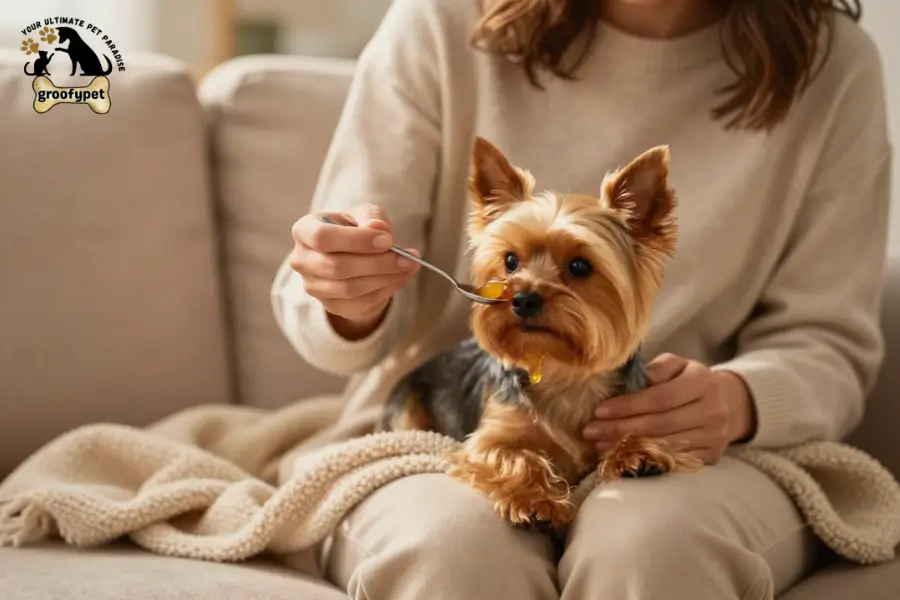
Raw honey is one of the most accessible and evidence-supported home remedies for respiratory tract irritation in dogs. Its thick, mucilaginous consistency coats the mucous membranes lining the throat and trachea, providing immediate physical relief from the friction that triggers coughing episodes.
A small amount, roughly half a teaspoon for small breeds up to a teaspoon for larger dogs given two to three times daily, can reduce the frequency and severity of honking cough episodes. Many dogs will readily lick honey from a spoon, making it one of the easiest natural interventions to incorporate.
Important considerations:
- Use raw, unpasteurized honey rather than commercial processed varieties, which have reduced antimicrobial activity.
- Never give honey to puppies under one year of age due to the risk of botulism spores.
- Diabetic dogs or those prone to weight gain should receive honey with veterinary oversight, as it is calorie-dense.
2. Use Marshmallow Root to Reduce Airway Inflammation
Marshmallow root (Althaea officinalis) is a cornerstone herbal remedy for managing throat irritation and upper respiratory congestion in dogs. Its active compound, mucilage, creates a protective coating over inflamed mucous membranes much like honey, but with a more sustained anti-inflammatory effect.
This herb has been used in integrative veterinary medicine to address tracheal irritation, reduce coughing in dogs, and support tissue healing in the respiratory tract. Marshmallow root is available in tincture, powder, and capsule forms and can be added directly to your dog’s food.
Dosing guidance:
- Follow the product manufacturer’s weight-based dosing instructions.
- Discuss appropriate dose and duration with your veterinarian, particularly if your dog is on concurrent medications, as marshmallow root may slow their absorption.
3. Consider Licorice Root for Anti-Inflammatory Support
Licorice root is another potent herbal remedy with dual-action benefits for dogs with tracheal collapse. It acts as both a natural anti-inflammatory and an expectorant, helping to clear mucus from the respiratory tract while simultaneously reducing airway inflammation.
The active compound in licorice root, glycyrrhizin, demonstrates measurable anti-inflammatory properties and can help ease breathing by reducing swelling in the throat and bronchial passages. It is also reported to have mild adrenal-supportive qualities, which may benefit dogs experiencing the stress and cortisol fluctuations associated with chronic respiratory distress.
Caution: Licorice root must be used carefully and not administered long-term. Prolonged use can cause elevated blood pressure and fluid retention, particularly in dogs with underlying cardiac or renal conditions. Always consult a veterinarian before introducing this herb to your dog’s regimen.
4. Try Mullein for Respiratory Tract Support
Mullein (Verbascum thapsus) has a long history in both human and veterinary herbal medicine as a respiratory tonic. It supports lung health, reduces bronchial spasm, and acts as a gentle expectorant, making it a valuable addition to the natural management of tracheal collapse in dogs.
Mullein’s active saponins help loosen and clear mucus from the respiratory tract, while its demulcent compounds soothe the inflamed lining of the trachea and bronchi. It is available as a dried herb, tincture, or as an ingredient in formulated canine respiratory support supplements such as Throat Gold.
How to use:
- Pet-formulated liquid tinctures are the most bioavailable option for dogs.
- Combine with marshmallow root for synergistic throat-soothing and mucus-clearing effects.
5. Add Omega-3 Fatty Acids to the Daily Diet
Omega-3 fatty acids sourced from fish oil (EPA and DHA) or flaxseed (ALA) are among the most broadly effective natural anti-inflammatories available for dogs. Chronic tracheal collapse is, at its core, an inflammation-driven condition: every coughing episode inflames the tracheal wall further, creating a cycle of irritation and structural deterioration.
Daily omega-3 supplementation interrupts this cycle by modulating the inflammatory response at a cellular level. These essential fatty acids also support the immune system, reduce oxidative stress, and may help protect cartilage integrity directly relevant to the C-shaped cartilage rings whose weakness underpins tracheal collapse.
Recommended sources:
- Pharmaceutical-grade fish oil capsules (EPA/DHA combined dose based on body weight — veterinary guidance advised)
- Sardines in water (added to meals a few times per week)
- Flaxseed oil for dogs with fish allergies (note: ALA conversion to DHA is less efficient)
6. Use a Humidifier and HEPA Air Purifier
One of the most immediately impactful environmental interventions for a dog with a collapsed trachea is improving indoor air quality. Dry air increases the viscosity of mucus in the respiratory tract, exacerbating inflammation and making it harder for the dog to breathe between coughing episodes.
A cool-mist humidifier placed near your dog’s primary resting area adds moisture to the air, soothing the respiratory tract and reducing dryness-related irritation, which is particularly important during winter months when indoor heating dramatically lowers relative humidity.
Pairing a humidifier with a HEPA-filter air purifier creates a two-pronged defense against respiratory distress:
- Humidifier: Maintains 40–60% relative humidity, which is the optimal range for respiratory health.
- HEPA air purifier: Removes fine particulate matter, pet dander, dust mites, and airborne pollutants that trigger coughing episodes in dogs with compromised airways.
Additional environmental considerations:
- Keep the dog’s sleeping area away from cooking fumes and cleaning product vapors.
- Switch to unscented, low-VOC household cleaners where possible.
- Avoid burning candles or incense in rooms where your dog spends significant time.
7. Switch From a Collar to a Well-Fitted Harness
This is perhaps the single most impactful structural change a dog owner can make immediately following a collapsed trachea diagnosis. Standard neck collars concentrate leash pressure directly on the trachea, the same structure that is already compromised. Even moderate collar tension during a walk can trigger an acute coughing episode or worsen tracheal inflammation.
A properly fitted chest harness distributes leash pressure across the sternum and ribcage rather than the throat, entirely eliminating this mechanical irritation.
What to look for in a harness:
- A Y-front or H-style harness that does not restrict shoulder movement or sit across the throat.
- Adjustable straps with a snug but non-restrictive fit — you should be able to slide two fingers under every strap.
- Lightweight materials that do not add unnecessary bulk or warmth in warmer months.
For dogs that resist harness fitting, a veterinary behaviorist or certified trainer can assist with desensitization techniques.
8. Maintain a Healthy Body Weight
Weight management deserves its own dedicated section because its impact on tracheal collapse symptoms is both substantial and frequently underestimated. Excess body weight places direct downward pressure on the thoracic inlet, the area where the trachea bends to enter the chest and where collapse most commonly occurs.
Fatty tissue deposits in the neck region can further constrict an already-narrowed airway. In overweight dogs, even a modest weight reduction of 10–15% of total body weight can produce measurable improvement in breathing ease and a reduction in coughing episode frequency.
Practical weight management steps:
- Request a canine body condition score assessment at your next veterinary appointment to establish a clear baseline and target weight.
- Transition to a high-protein, low-carbohydrate diet to support lean muscle retention while achieving caloric deficit.
- Replace calorie-dense commercial treats with lean options such as plain cooked chicken, cucumber slices, or blueberries.
- Avoid ad libitum (free-choice) feeding — structured meal times give you full control over daily caloric intake.
9. Create a Stress-Free, Calm Environment
Excitement, anxiety, and stress are among the most reliable triggers for acute coughing episodes in dogs with tracheal collapse. When a dog becomes agitated — whether through excitement at a visitor’s arrival, separation anxiety, or exposure to loud environments — the rapid increase in breathing rate and force places heightened mechanical stress on the flattened tracheal walls.
Natural approaches to managing canine stress include:
Herbal calming remedies:
- Chamomile: A gentle nervine herb with mild sedative properties. Available as a cooled herbal tea added to food or water or in pet-formulated drops.
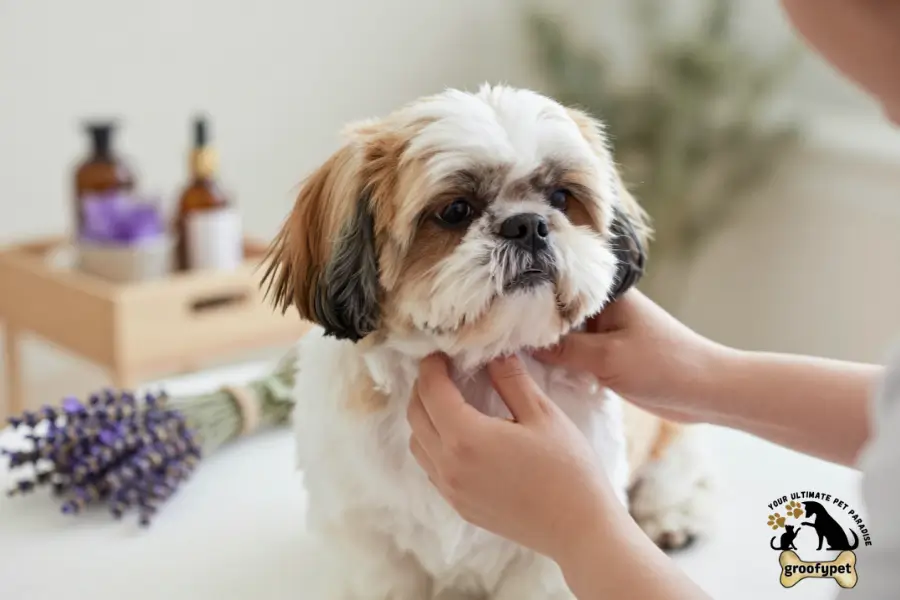
- Lavender: Calming essential oil known for its anxiolytic properties — use in a diffuser at low concentration, ensuring the dog can leave the room freely. Never apply essential oils directly to a dog’s skin or coat.
- Valerian root and passionflower: Used in veterinary herbal medicine to support the nervous system and reduce situational anxiety.
Environmental stress reduction strategies:
- Establish a consistent daily routine — predictability significantly reduces background anxiety levels in dogs.
- Designate a quiet retreat space (a crate or quiet corner with a bolster bed) where your dog can withdraw from stimulation.
- Use white noise or calming music to buffer sudden environmental sounds.
- Minimise high-energy play sessions and long walks during hot, humid weather when respiratory effort is inherently increased.
10. Elevate the Head During Sleep and Rest
Dogs with tracheal collapse often breathe most comfortably when their head and neck are slightly elevated. This position reduces the gravitational compression on the trachea and allows the airway to remain more open during the relaxed breathing of sleep.
A dog bed with bolster sides or a couch-style design allows your dog to naturally rest their chin and neck on a raised edge. Orthopedic foam beds with an integrated wedge angle are also effective.
Additional positional tips:
- When carrying your dog, support the entire body from underneath — one hand under the chest, one under the abdomen. Never lift under the armpits, as this compresses the thorax and increases tracheal pressure.
- In the car, a booster seat or travel crate that allows the dog to sit in an upright position is preferable to lying flat on a seat.
Natural Supplements Worth Discussing With Your Veterinarian
Beyond the core remedies above, the following supplements have documented or theoretical benefit in managing tracheal collapse symptoms:
Turmeric (Curcumin): The active compound curcumin is a well-studied anti-inflammatory agent. Added to food in small amounts — typically combined with black pepper and a fat source for bioavailability — it may help reduce chronic inflammation in the airways.
CBD Oil: Preliminary evidence and clinical anecdote support CBD oil as a tool for reducing inflammation and managing anxiety in dogs with respiratory conditions. It may reduce the frequency of stress-induced coughing episodes and support overall comfort. Dosing should be guided by a veterinarian with integrative medicine experience, and only third-party tested, pet-specific CBD products should be used.
Slippery Elm Bark: Another mucilaginous herb with similar mechanisms to marshmallow root. Slippery elm coats and soothes irritated mucous membranes and is particularly effective when combined with marshmallow root in blended respiratory support formulas.
Coconut Oil: Anecdotally used by many dog owners for its antimicrobial and anti-inflammatory properties. A small amount added to food may help reduce throat irritation, though evidence remains largely empirical.
When to Move Beyond Natural Remedies?
Natural interventions are most effective in Grade 1 and Grade 2 tracheal collapse, where the airway remains sufficiently open for the dog to maintain a reasonable quality of life. As the condition progresses to Grade 3 or Grade 4, pharmaceutical intervention — cough suppressants, bronchodilators, steroids, or anti-anxiety medications — becomes necessary alongside home care.
Seek immediate emergency veterinary care if your dog:
- Displays signs of respiratory distress—wide, panicked eyes, neck extended forward in a goose-neck posture, inability to settle
- Has gums that appear pale, grey, blue, or muddy in colour
- Cannot stop coughing despite calm surroundings and normal activity levels
- Loses consciousness or collapses
In severe cases, surgical placement of a tracheal stent, a metal implant that holds the trachea open from within, may be the most appropriate intervention to restore acceptable quality of life. Research indicates that dogs managed with stent placement have significantly longer median survival times than those managed with medication alone in advanced disease stages.
Building a Daily Care Routine for Long-Term Comfort
How to soothe dog with collapsed trachea naturally? Managing tracheal collapse naturally is not a single-intervention strategy — it is a comprehensive daily practice. A sustainable care routine for a dog with tracheal collapse might look like this:
Morning: Administer honey with breakfast, add omega-3 fish oil and marshmallow root powder to food, put on harness before any outdoor time, and take a brief low-intensity walk in cool morning air.
Afternoon: Quiet indoor rest period, humidifier running, HEPA filter on; avoid exciting visitors or play sessions during peak heat.
Evening: Chamomile or lavender diffuser during wind-down time, elevated bolster bed for sleep, second daily honey dose with dinner.
Weekly: Weigh your dog to monitor body condition, assess cough frequency and severity, and note any environmental changes that may have triggered episodes.
Final Thoughts
A tracheal collapse diagnosis is not the end of your dog’s quality of life, not by a wide margin. How to soothe dog with collapsed trachea naturally?With attentive daily care, thoughtful use of natural remedies, and a strong partnership with a veterinarian who understands both conventional and integrative approaches, many dogs with tracheal collapse live comfortably for years.
The natural strategies outlined here, from marshmallow root and licorice root to HEPA filtration, harness use, and stress reduction, address the underlying mechanisms of the condition rather than merely masking symptoms. That systemic approach is what separates genuinely effective home management from short-term relief.
Your dog depends on the choices you make every single day. With the right knowledge and consistent care, those choices can make a measurable, lasting difference in how comfortably they breathe.
Always consult your veterinarian before introducing herbal supplements or making significant changes to your dog’s diet or care routine, particularly if your dog is currently on prescribed medication for tracheal collapse.
Can Dogs Eat Pumpernickel Bread? Safety Risks & Facts!
What to Give a Sick Dog? 10 Foods That Can Help Your Pup Feel Better!