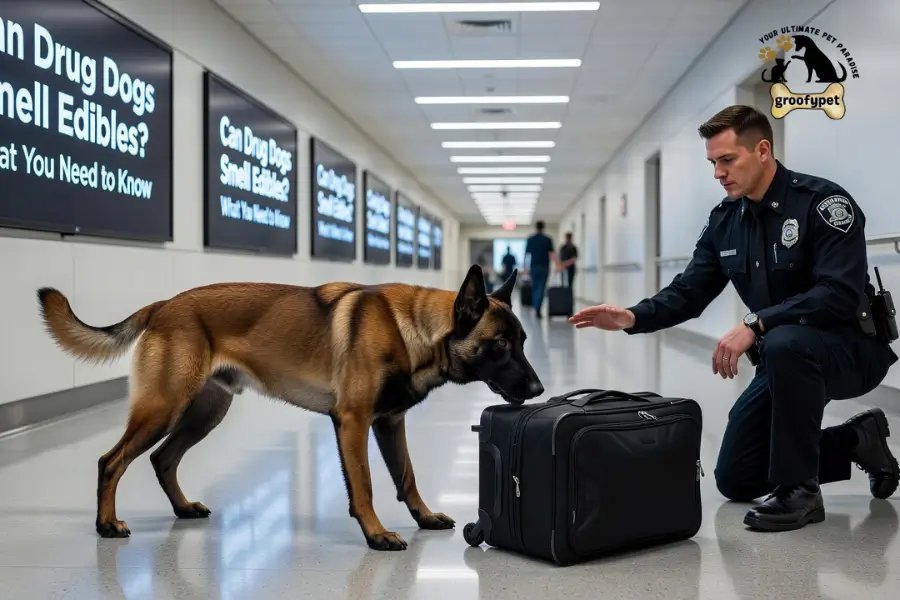
Yes, trained drug dogs can smell certain cannabis edibles, including THC gummies, brownies, chocolates, and other marijuana-infused products. Their ability depends on what substances they are trained to detect and the odors they recognize. Many people assume that edibles are difficult for drug dogs to recognize because they look and smell like ordinary food.
However, cannabis-infused products can still contain recognizable cannabis-associated odors. A dog’s powerful sense of smell allows it to identify specific scents that humans may not notice. Whether a police K9 or airport detection dog can recognize a particular edible depends on its training, target substances, and working environment. Not every detection dog receives the same training.
In this guide, we explain how drug dogs detect edibles, whether they can smell THC gummies, and how cannabis detection works.
Can Drug Dogs Smell Edibles?
Yes, trained drug dogs can detect odors associated with certain marijuana edibles. These products may include THC gummies, cannabis brownies, chocolates, cookies, and other infused foods. Drug dogs do not simply recognize something because it looks like marijuana. They learn to identify particular odors through specialized scent training. Depending on their training program, these odors may include cannabis-related scents.
Cannabis edibles can contain compounds that produce recognizable odors. Although some products have a mild smell, this does not automatically make them undetectable to a trained dog. However, detection abilities vary. A dog trained to recognize one group of controlled substances may not be trained to recognize cannabis. Its training history plays an important role in what it can detect.
It is also important to understand that detecting an odor does not necessarily mean a dog can identify the exact product, its THC concentration, or whether it is legally permitted.
How Do Drug Dogs Detect Cannabis Edibles?
Drug-detection dogs have a highly developed sense of smell. Their noses can recognize and separate different odors, even when several smells are present in the same environment. Humans often identify food through appearance, taste, and smell. Detection dogs rely heavily on scent recognition. Professional trainers use repeated exercises to teach dogs which target odors they should recognize.
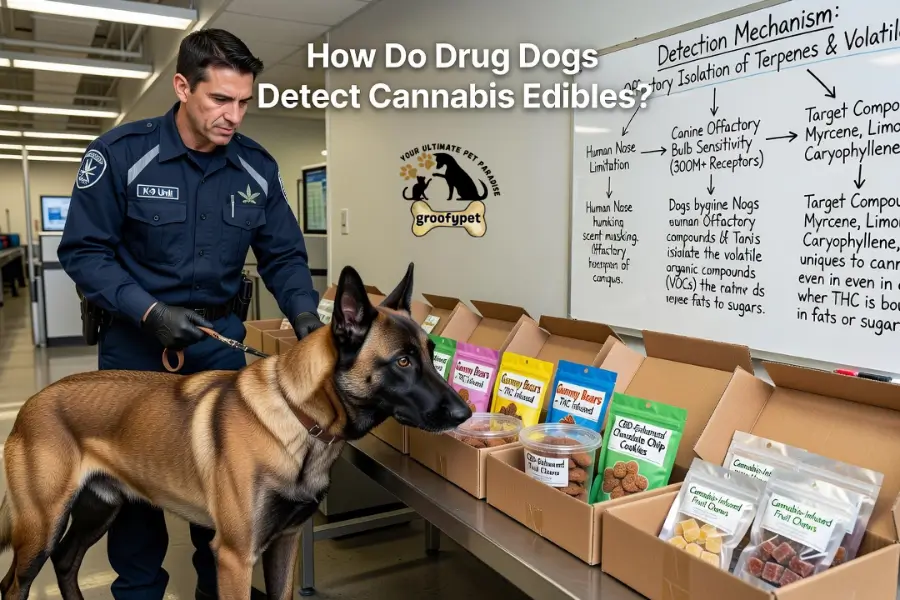
Here is how the process generally works.
1. Dogs Have Powerful Noses
A dog’s sense of smell is much stronger than a human’s. Its olfactory system contains specialized structures that help detect and process different odors. Dogs also use their noses to explore their surroundings. They can distinguish between many scents that people might overlook.
This natural ability makes certain breeds suitable for detection work. However, successful detection requires more than having a sensitive nose.
2. They Receive Specialized Scent Training
Professional detection dogs learn to recognize specific target odors through structured training. Trainers introduce target scents and teach dogs to respond when they recognize them. Dogs may use a trained behavior, such as sitting or another indication, to communicate a detection.
The exact training process varies between agencies and working environments.
3. Handlers Interpret Their Behavior
A detection dog usually works alongside a trained handler. The handler observes the dog’s behavior and recognizes its trained indication.A dog may alert when it identifies a target odor. However, an alert is not the same as laboratory confirmation that a particular substance is present.
The handler must interpret the situation according to the relevant procedures and legal requirements.
Can Drug Dogs Smell Different Types of Edibles?
Yes, trained drug dogs may detect odors associated with different cannabis-infused foods. However, their ability depends on their specific training and the target odors they have learned to recognize.
Here are some common examples.
THC Gummies
THC gummies are popular cannabis-infused products. They may look similar to ordinary fruit-flavored candy, but their appearance does not determine whether a detection dog can recognize associated odors. A dog trained to recognize relevant cannabis odors may detect them.
Marijuana Brownies
Cannabis brownies combine ordinary baking ingredients with cannabis-derived ingredients. Their food ingredients do not automatically eliminate cannabis-associated odors. A trained detection dog may recognize relevant target odors depending on its training.
Cannabis Chocolates
Cannabis chocolates contain chocolate and cannabis-derived ingredients. Chocolate has a strong natural smell, but a detection dog’s abilities are not limited to identifying familiar food odors. Whether a particular product is detectable depends on the odors present and the dog’s training.
THC Cookies
THC cookies are another form of cannabis edible. They may contain butter, flour, sugar, chocolate, or other ingredients. Their appearance is similar to ordinary cookies. However, trained detection dogs focus on odors rather than visual similarities.
Cannabis Candies
Cannabis candies come in different shapes, flavors, and formulations. Some resemble ordinary sweets, while others are clearly marketed as cannabis products. A dog’s ability to detect them depends on the specific target odors it has been trained to identify.
Are All Drug Dogs Trained to Smell Edibles?
No. Not every police dog or working dog receives cannabis-detection training. Different detection dogs have different responsibilities. Some specialize in explosives, while others are trained to identify narcotics, search for missing people, or locate other specific targets.
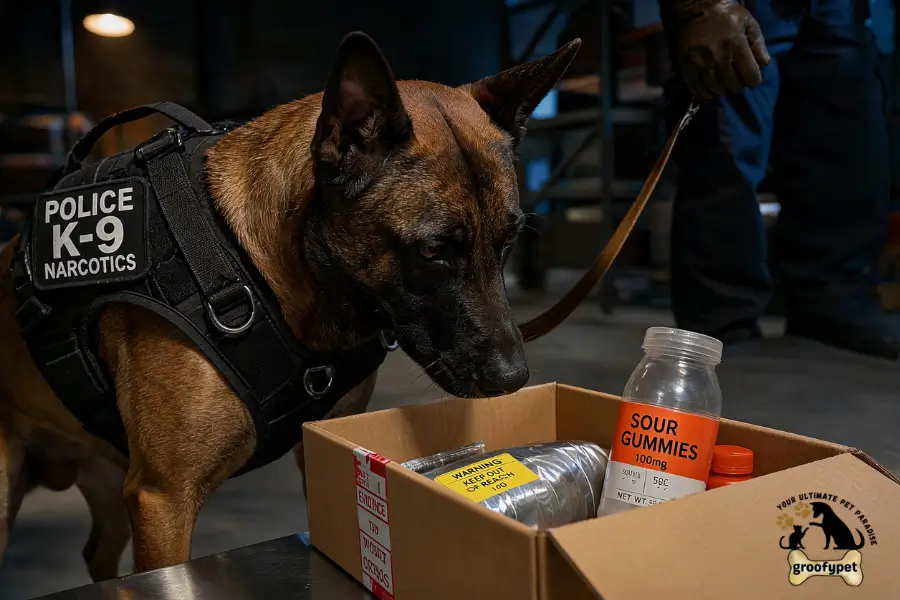
A dog’s abilities depend on its training program.
For example, the Illinois Law Enforcement Training and Standards Board explains that some agencies have chosen not to train their drug dogs to detect cannabis. This reflects changes in cannabis laws and law enforcement practices. Canine Program
Some dogs are trained to recognize:
- Marijuana and cannabis-related odors.
- Cocaine.
- Heroin.
- Methamphetamine.
- Other controlled substances.
Training programs also require regular practice to maintain detection skills. The National Institute of Standards and Technology’s published canine guidelines discuss odor recognition, testing, and ongoing maintenance training. Therefore, you cannot assume that every police K9 can detect marijuana edibles.
Can Police Dogs Detect THC in Edibles?
Police dogs can detect cannabis-associated odors when they have received appropriate training. However, it is important to understand what this actually means. A detection dog does not perform a chemical laboratory test. It responds to odors associated with substances it has learned to recognize.
THC stands for tetrahydrocannabinol. It is the main psychoactive compound in marijuana and is responsible for its intoxicating effects. Cannabis products may contain different cannabinoids and aromatic compounds. Their scent profiles can vary depending on the ingredients, manufacturing process, and cannabis source.
A trained dog may recognize relevant cannabis-associated odors without knowing whether a product contains a particular THC concentration.
This distinction matters because detecting a cannabis-related odor and confirming the chemical contents of an edible are two different things.
Drug Dogs vs. Regular Dogs: What Is the Difference?
Both ordinary pet dogs and professional detection dogs have powerful noses. However, their training and responsibilities are very different.
| Feature | Drug Detection Dogs | Regular Pet Dogs |
|---|---|---|
| Main purpose | Detect trained target odors | Companionship and everyday activities |
| Training | Specialized scent training | Basic obedience or household training |
| Scent recognition | Trained to identify specific targets | Naturally explores different smells |
| Handler | Usually works with a trained professional | Usually lives with an owner |
| Working environment | Airports, public areas, and law enforcement settings | Homes, parks, and outdoor spaces |
| Detection tasks | Specific trained odors | No formal detection responsibilities unless trained |
An ordinary dog may notice unfamiliar smells, including odors associated with cannabis. However, noticing an unusual smell is not the same as performing a trained drug-detection task.Professional detection dogs must learn specific behaviors that communicate their findings to their handlers.
What Factors Affect a Drug Dog’s Detection Ability?
A drug dog’s ability to recognize an odor depends on several factors. Not every dog performs the same way in every situation.
1. Training and Experience
Training is one of the most important factors. Dogs must learn which target odors matter and how to communicate when they recognize them.Regular practice helps maintain their skills.
2. Target Odors
Detection dogs are trained for particular substances or odor profiles. A dog trained for explosives may not have the same capabilities as a dog trained for narcotics.
3. Environmental Conditions
Different environments can affect scent detection. Temperature, airflow, background odors, and other surroundings may influence how scents are distributed.
4. The Dog’s Health
A dog’s physical condition can affect its working performance. Illness, fatigue, and problems affecting its sense of smell may interfere with detection work.
5. Handler Experience
Detection dogs work as part of a team. Their handlers must understand canine behavior and recognize trained alerts correctly. A well-trained handler helps ensure that the dog’s behavior is interpreted appropriately.
Can Drug Dogs Smell Edibles at Airports?
Airport detection dogs are trained for different security responsibilities. Some work with explosives, while others are trained for narcotics or other specific targets. Whether a particular airport dog can detect cannabis edibles depends on its assigned role and training.
Travelers should also understand that cannabis laws differ between states and federal jurisdictions. A product that is permitted under a particular state’s law may still create legal issues under federal law or during certain types of travel.
For this reason, travelers should check applicable laws and official airport and transportation rules before carrying cannabis products.
Do Drug Dogs Detect THC or CBD Edibles?
THC and CBD are two different cannabinoids found in cannabis plants.
- THC (Tetrahydrocannabinol): The primary psychoactive cannabinoid commonly associated with the marijuana high.
- CBD (Cannabidiol): A cannabinoid that does not produce the same intoxicating effects as THC.
CBD products may come from hemp or other cannabis sources. Some contain additional cannabinoids or trace amounts of THC, depending on their formulation.
Can drug dogs smell CBD edibles?
The answer depends on the dog’s trained target odors and the product’s actual odor profile. A dog trained to recognize cannabis-related odors may respond to certain CBD products, but this cannot be assumed for every dog or product.
A product’s CBD label also does not tell you exactly which odors a detection dog has been trained to recognize.It is important not to confuse a dog’s odor alert with a chemical identification of THC or CBD.
Read This : How Many Treats Per Day for a Puppy? A Safe Feeding Guide
What Happens When a Drug Dog Alerts?
When a trained drug dog recognizes a target odor, it may perform a specific behavior to communicate its detection to the handler.This behavior is known as an alert or indication.Depending on the dog’s training, an indication may involve sitting, stopping, staring, or another learned response.
The handler then follows the procedures established by the relevant agency.However, a dog alert does not independently establish that a person possesses illegal drugs. It is an indication that the dog has responded to a trained target odor.There may be additional investigation, testing, or legal procedures before authorities reach a conclusion.
This distinction is important because an alert and confirmed evidence are not necessarily the same thing.
Common Myths About Drug Dogs and Edibles
There are several misconceptions about cannabis edibles and drug-detection dogs.
Myth 1: Drug dogs can only smell traditional marijuana.
Fact: Detection dogs can be trained to recognize specific odors associated with different target substances. Their capabilities depend on their training.
Myth 2: All police dogs detect cannabis.
Fact: Some agencies train dogs to detect cannabis, while others choose different target substances.
Myth 3: THC gummies are impossible for drug dogs to recognize.
Fact: A gummy’s candy-like appearance does not establish whether a trained dog can detect associated cannabis odors.
Myth 4: Every dog is a drug-detection dog.
Fact: Ordinary dogs have a strong sense of smell, but professional detection requires specialized training.
Myth 5: A dog alert proves that an edible contains THC.
Fact: An alert indicates a response to a trained odor. It does not identify the exact chemical composition of a product.
Frequently Asked Questions
Can Drug Dogs Smell THC Gummies?
Yes, trained drug dogs may detect odors associated with THC gummies. Their ability depends on the target odors included in their training. The fact that gummies look like ordinary candy does not mean they are undetectable.
Can Drug Dogs Smell Marijuana Brownies?
Yes, a dog trained to recognize cannabis-associated odors may detect marijuana brownies. The presence of ordinary baking ingredients does not necessarily eliminate recognizable cannabis odors.
Can Police Dogs Detect THC Edibles?
Police dogs can detect cannabis-associated odors when their training includes the relevant targets. However, they cannot determine the exact THC concentration simply by smelling a product.
Can Drug Dogs Smell Cannabis Chocolates?
They may detect cannabis-associated odors from cannabis-infused chocolates. Their ability depends on the specific odor compounds present and the dog’s training.
Are Airport Dogs Trained to Detect Marijuana?
Some airport and border security dogs receive narcotics-detection training that includes marijuana. Others specialize in explosives or different security targets. Their responsibilities vary by agency..
8. How Powerful Is a Drug Dog’s Sense of Smell?
Dogs have a highly developed olfactory system that allows them to recognize and distinguish many odors. Their natural scent abilities make them useful for specialized detection work.
9. Can Drug Dogs Detect Cannabis Products?
Yes, appropriately trained dogs can recognize odors associated with cannabis products. However, their abilities depend on the substances and odor profiles included in their training.
10. What Does It Mean When a Drug Dog Alerts?
An alert means the dog has performed a trained behavior associated with recognizing a target odor. It does not automatically prove that a particular illegal substance is present.
Also Read : Dog Ate Muscle Relaxer? Symptoms, Risks, and What to Do
Key Takeaways
Here are the most important things to understand about drug dogs and cannabis edibles:
- Trained drug dogs can recognize odors associated with certain cannabis edibles.
- THC gummies, brownies, chocolates, and cookies may have detectable cannabis-associated odors.
- Not every police dog receives cannabis-detection training.
- A dog’s detection abilities depend on its training and target odors.
- Ordinary pet dogs are not automatically trained drug-detection dogs.
- Airport security dogs have different responsibilities depending on their training.
- A dog alert does not confirm the exact chemical contents of an edible.
- THC and CBD are different cannabinoids, and a dog’s alert does not identify their concentrations.
Final Thoughts
So, can drug dogs smell edibles? Yes, trained detection dogs can recognize odors associated with certain cannabis-infused products, including gummies, brownies, chocolates, and cookies.However, not every detection dog has the same abilities. Some dogs receive specialized cannabis training, while others focus on explosives or different substances.
The most important factor is the dog’s training rather than the appearance of the edible. Understanding how scent recognition works helps explain why cannabis edibles are not automatically beyond the abilities of trained detection dogs.