
Have you ever noticed your cat following you from room to room, sleeping beside you, or staring at you while you work? These adorable habits may be signs your cat is obsessed with you. Cats often develop strong emotional bonds with their favorite humans and show affection through their everyday behavior.
Unlike dogs, cats usually express love in quieter and sometimes unusual ways. Your feline friend might rub its face against your legs, gently knead your lap, or greet you whenever you return home. Some cats even follow their owners into the bathroom because they want to stay close.
Although cats have different personalities, certain behaviors can reveal trust, comfort, and attachment. Understanding these signs can help you recognize how your cat feels about you and whether your relationship has become especially close.
Let’s explore 15 common signs that your cat considers you its favorite person.
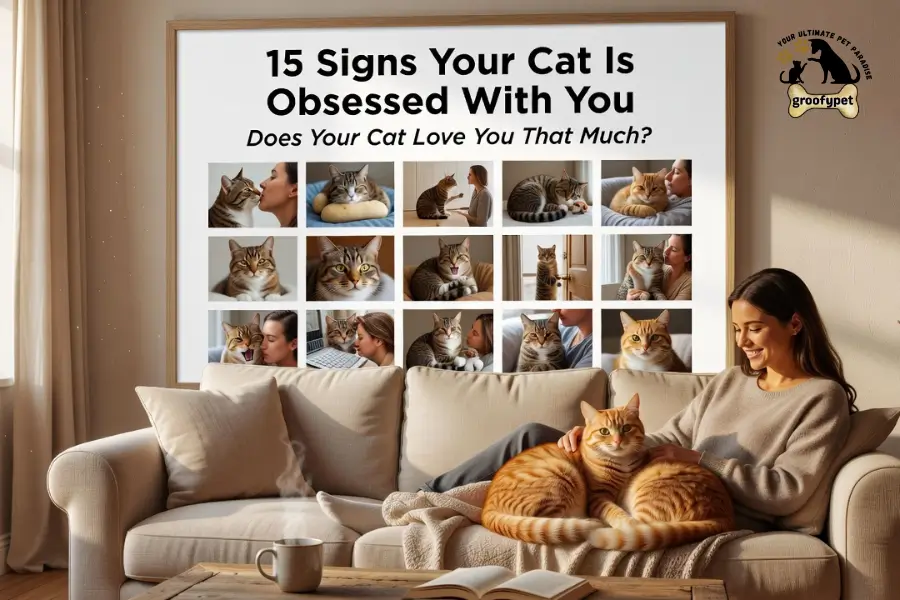
15 Signs Your Cat Is Obsessed With You
Cats cannot explain their feelings with words, but their body language and daily habits communicate plenty. If your cat regularly displays several of these behaviors, it may have developed a particularly strong bond with you.
1. Your Cat Follows You Everywhere
Does your cat follow you into the kitchen, bedroom, living room, and even the bathroom? This behavior may be one of the clearest signs of a strong human-cat bond. Some cats simply enjoy being near their favorite people. They want to know what you are doing and may feel more comfortable when you are around. Your presence can also provide companionship, entertainment, and a familiar routine.
For example, your cat might leave its comfortable sleeping spot as soon as you walk into another room. It may quietly follow behind you without asking for anything.
What it means: Your cat enjoys your company and may consider you an important part of its social world.
2. Your Cat Always Wants to Sit on You
A cat that constantly chooses your lap over an empty chair may have a special attachment to you. Your body provides warmth, comfort, and a familiar scent that makes your cat feel secure. Some cats climb onto their owners whenever they sit down. Others wait patiently until you finish working before settling on your legs.
This behavior can also reflect your cat’s preference for physical closeness. Not every feline enjoys being held, so choosing to sit on you voluntarily can be meaningful.
What it means: Your cat feels comfortable around you and enjoys sharing its resting space with you.
3. Your Cat Sleeps Next to You or on Your Bed
Cats spend many hours sleeping, so choosing a place where they feel safe is important. If your cat regularly sleeps beside you, it may trust you and enjoy your familiar presence. Your bed offers warmth, soft bedding, and a familiar smell. Your cat may also enjoy sleeping near you because it feels relaxed in your company.
Some cats sleep near their owner’s head, while others prefer curling up beside their feet. A few even claim the entire pillow.
What it means: Your cat associates you and your sleeping area with comfort and security.
4. Your Cat Constantly Rubs Against You
Does your cat rub its cheeks against your legs whenever you walk past? This adorable habit is called head bunting when a cat gently presses its head against you. Cats have scent glands around their cheeks and other parts of their bodies. When they rub against you, they leave familiar scents that help create a recognizable, comfortable environment.
Your cat might also rub its body against your hands, face, or clothing to request attention. It is a common form of feline social communication.
What it means: Your cat is comfortable with you and may be using scent marking as part of its friendly social behavior.
5. Your Cat Gives You Slow Blinks
Have you ever looked at your cat and noticed it slowly closing and reopening its eyes? This gentle expression is commonly called a cat’s slow blink. Cats often display slow blinking when they feel relaxed and comfortable. It can be a friendly form of communication rather than a sign of fear or discomfort.
Try slowly closing your eyes and opening them again while looking toward your cat. Some cats respond with another slow blink. However, avoid staring directly at your cat for long periods. Direct, prolonged eye contact can feel uncomfortable to some cats.
What it means: Your cat may be communicating that it feels relaxed and safe around you.
6. Your Cat Kneads You With Its Paws
Kneading is the adorable behavior where cats push their front paws against a soft surface, alternating between their left and right paws.You might notice your cat doing this on your lap, stomach, blanket, or favorite sweater. Some cats even purr while making these little movements.
Kneading begins during kittenhood when kittens press their mother’s belly while nursing. Adult cats may continue this behavior when they feel relaxed, comfortable, or ready to settle down. Your cat may also use its paws to leave familiar scents from glands in its feet.
What it means: Kneading often indicates comfort and contentment, although it can have several purposes.
7. Your Cat Greets You at the Door
If your cat runs toward the entrance whenever you come home, it may genuinely enjoy your return.Some cats recognize the sound of their owner’s footsteps, car, or keys. They may wait near the door and begin meowing as soon as they hear familiar sounds.
Your cat might also circle your legs, raise its tail, or rub against your shoes. These behaviors can be part of an enthusiastic greeting. It is especially noticeable when your cat usually spends time resting but immediately becomes active when you arrive.
What it means: Your cat recognizes you, enjoys your presence, and may be excited to interact with you again.
8. Your Cat Meows Just to Get Your Attention
Does your cat start meowing whenever you sit down, use your laptop, or stop paying attention? Your feline friend may have discovered that vocalizing gets a response from you. Adult cats often use meowing to communicate with people. They may meow to request food, playtime, affection, or access to another room.
Some cats develop different vocal sounds for different situations. You might recognize a particular meow that your cat uses when it wants you to follow it.However, excessive or suddenly increased vocalization should not automatically be considered affection. Hunger, stress, discomfort, and medical conditions can also cause changes in meowing.
What it means: Your cat wants to communicate with you, although the reason depends on the situation.
9. Your Cat Licks Your Skin or Hair
If your cat regularly licks your hand, arm, or hair, it may be showing a social grooming behavior called allogrooming.Cats sometimes groom other cats with whom they have friendly relationships. They may also direct this behavior toward trusted humans.
Your cat might lick your fingers while sitting on your lap or gently groom your hair while you are resting. This can be a way of interacting and sharing familiar scents. Some cats also lick because they enjoy the salty taste of human skin. Therefore, licking does not always have an emotional meaning.
What it means: Your cat may be treating you like a familiar social companion and expressing comfort through grooming.
10. Your Cat Shows You Its Belly
When a cat rolls onto its back and exposes its belly, it can look like an invitation for a tummy rub. Sometimes, it is simply showing that it feels relaxed around you. The stomach is a vulnerable area for cats. Exposing it can indicate that your cat feels comfortable enough to relax in your presence.
However, this does not mean every cat wants its belly touched. Some cats immediately grab or bite a hand that approaches their stomach. Pay attention to your cat’s body language before attempting to pet it.
What it means: Your cat may feel safe enough to relax around you, but an exposed belly is not always an invitation to touch.
11. Your Cat Watches You Wherever You Go
Does your cat sit across the room and watch everything you do? It might observe you while cooking, cleaning, reading, or working. Cats are naturally curious animals. They pay attention to movement, sounds, and changes in their surroundings. When your cat regularly watches you, it may simply find your activities interesting. It might also be waiting for an opportunity to interact, play, or receive attention.
For example, your cat may watch your hands while you prepare food or follow your movements around the house.
What it means: Your cat is interested in your activities and may enjoy keeping you within its sight.
12. Your Cat Wants to Be Involved in Everything You Do
Some cats behave like tiny supervisors who want to participate in every household activity. Your cat might sit on your laptop while you work, climb into an empty laundry basket, or investigate whatever you are holding. It may even interrupt you when you are reading a book or talking on the phone. These behaviors can be entertaining, especially when your cat seems determined to become the center of attention.
Cats are naturally interested in new objects and activities. Your attention may also make certain situations more rewarding for them.
What it means: Your cat enjoys interacting with its environment and may want to share your attention.
13. Your Cat Brings You Toys or Presents
Finding a toy mouse beside your bed or a favorite ball near your feet might be your cat’s way of starting an interaction. Some cats carry toys around the house and drop them near their owners. Others bring toys while making little chirping or meowing sounds.
This behavior may reflect play, hunting instincts, or an attempt to get your attention. Your cat might expect you to throw the toy or participate in a game.It does not necessarily mean your cat is giving you a gift in the same way humans exchange presents.
What it means: Your cat may want to play with you or share an activity it finds enjoyable.
14. Your Cat Gets Jealous When You Give Attention to Others
Does your cat suddenly appear whenever you pet another animal? Perhaps it pushes its head between your hand and another pet or climbs onto your lap when someone else receives attention.These behaviors can look like jealousy, but feline emotions are more complicated than human interpretations.
Your cat may be responding to a change in its routine, competing for access to a comfortable spot, or simply seeking interaction.For example, if you start playing with another cat, your feline companion might walk over and demand a turn.
What it means: Your cat wants attention or access to you. This behavior alone does not prove human-like jealousy.
15. Your Cat Becomes Upset When You Leave
Some cats notice when their favorite person leaves the house. They may wait near the door, vocalize, or become more active when they hear someone returningA cat that enjoys your company may miss familiar interactions when you are away. However, severe distress when left alone can indicate a separation-related problem rather than ordinary affection.
Watch for repeated crying, destructive behavior, inappropriate urination, excessive grooming, or changes in appetite when you leave.These signs deserve attention, particularly if they appear suddenly or become more intense.
What it means: Your cat may be strongly attached to you, but distress during separation should not be mistaken for proof of love.
Does Your Cat Actually Love You or Just Want Food?
It is a common question among cat owners: Does my cat love me, or does it only care about its next meal?Food is an important motivation for cats, and they quickly learn which person provides their favorite meals. However, a strong relationship usually involves more than feeding.
Look at how your cat behaves when there is no food involved.
- Does it approach you when you are sitting quietly?
- Does it sleep beside you even after eating?
- Does it rub against your legs without asking for food?
- Does it choose your company during relaxation or playtime?
- Does it greet you when you return home?
If your cat regularly seeks your company without expecting a meal, it may enjoy your relationship beyond feeding routines.Remember that food can also be part of positive bonding. Feeding your cat consistently helps build familiarity and trust.
Why Does Your Cat Choose You Over Everyone Else?
Cats can develop preferences for particular people in a household. Your cat might follow you everywhere but show little interest in another family member.
Several factors can influence this preference.
1. Your personality matches its preferences. Some cats prefer quiet people who allow them to approach without forcing interaction.
2. You respect its boundaries. Cats often appreciate people who understand when they want attention and when they need space.
3. You provide positive experiences. Feeding, grooming, playing, and gentle interaction can help build a strong relationship.
4. Your scent is familiar. Cats use their powerful sense of smell to recognize familiar people and surroundings.
5. You follow a predictable routine. Consistent daily interactions can make your cat feel more comfortable.
A cat’s favorite person is not necessarily the person who feeds it most often. The relationship can also depend on socialization, temperament, and individual preferences.
Signs Your Cat Has Imprinted on You
People often use the word imprinting to describe a cat that seems extremely attached to one person. However, feline attachment is not exactly the same as imprinting in certain other animal species.A cat can develop a strong social bond with a person through repeated positive experiences.
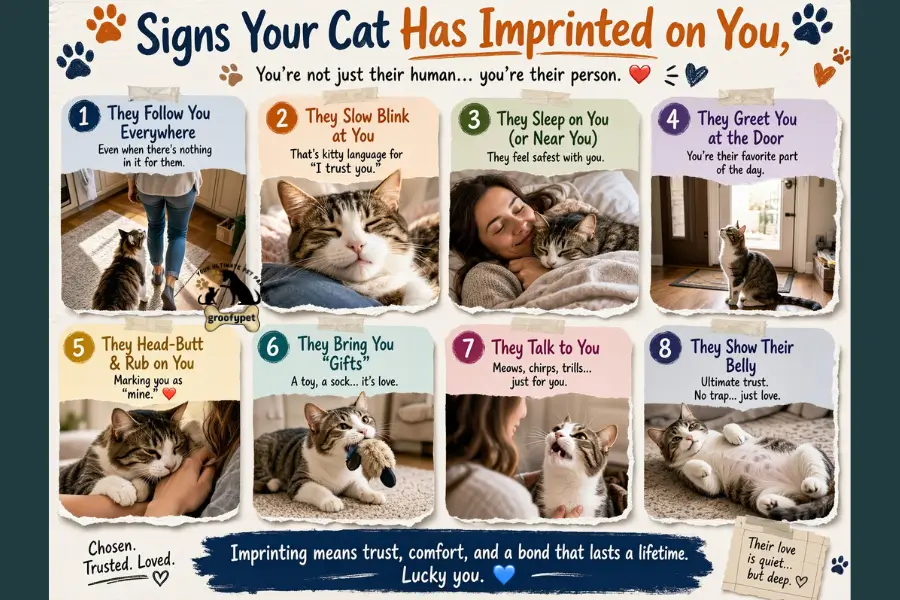
Some common signs include:
- Following you throughout the house.
- Choosing your lap over other resting places.
- Sleeping near you regularly.
- Rubbing its face against you.
- Seeking your attention during quiet moments.
- Greeting you when you return home.
- Relaxing comfortably when you are nearby.
These behaviors can suggest that your cat recognizes you as a familiar and trusted companion.
Also Read : How to Deal With an Aggressive Cat Towards Other Cats: A Step-by-Step Guide
Is It Normal for a Cat to Be This Attached?
Yes. Many cats enjoy spending considerable time with their favorite humans. Some are naturally social and affectionate, while others prefer occasional attention and plenty of personal space.A cat that follows you around, sleeps beside you, and asks for cuddles is not necessarily displaying an unhealthy attachment.
The important difference is whether your cat can still eat, sleep, play, explore, and relax independently.Healthy attachment allows your cat to enjoy your company without becoming excessively distressed whenever you are unavailable.
When Does Clingy Cat Behavior Become a Concern?
Although affectionate behavior is usually harmless, sudden changes in your cat’s personality deserve attention.A previously independent cat that suddenly refuses to leave your side may be experiencing stress, discomfort, or an underlying health problem.
Watch for these warning signs:
| Behavior | What it may indicate |
|---|---|
| Constant crying when alone | Possible separation-related distress |
| Sudden excessive clinginess | Stress, discomfort, or illness |
| Loss of appetite | Possible medical or emotional problem |
| Excessive grooming | Stress or skin irritation |
| Hiding more than usual | Fear, stress, or illness |
| Destructive behavior | Boredom, anxiety, or frustration |
| Changes in litter box habits | Medical or behavioral concerns |
If your cat suddenly becomes unusually clingy or shows additional changes in appetite, energy, grooming, or bathroom habits, contact your veterinarian.A veterinary professional can help determine whether the behavior is related to health, stress, or environmental changes.
How to Strengthen Your Bond With Your Cat
Building a stronger relationship with your cat does not require expensive toys or complicated training. Small, consistent interactions can make your feline companion feel comfortable and secure.Here are some practical ways to strengthen your bond.
Spend time playing together. Use feather wands, interactive toys, or small cat-safe toys to encourage natural hunting behavior.Respect your cat’s boundaries. Allow your cat to approach you instead of forcing cuddles or picking it up when it wants space.Try slow blinking. Gently close and reopen your eyes when your relaxed cat looks toward you.
Maintain a consistent routine. Regular feeding, playtime, and quiet interaction help create a predictable environment.Offer comfortable resting places. Provide cozy beds, blankets, and safe spaces where your cat can relax.Talk to your cat. Gentle communication can help make everyday interactions familiar and positive.
Use positive reinforcement. Reward desirable behavior with treats, praise, or play.The secret is understanding your cat’s individual personality. Some cats enjoy long cuddling sessions, while others show affection by quietly sitting nearby.
Why Does Your Cat Follow You Into the Bathroom?
If your cat refuses to give you privacy in the bathroom, you are certainly not alone. Many cat owners experience this funny behavior.
There are several possible explanations:
- Curiosity: Your cat wants to investigate what you are doing.
- Attention: It may notice that you are no longer interacting with it.
- Routine: Your cat recognizes your daily habits and wants to participate.
- Companionship: It simply enjoys being close to you.
- Interesting surroundings: Bathrooms contain running water, unusual smells, and interesting objects.
Your cat probably does not understand the concept of bathroom privacy. It may simply consider every room in your home part of its territory.
Do Male and Female Cats Show Obsession Differently?
Male and female cats can both develop strong attachments to their owners. However, their personalities and individual experiences often matter more than their sex.Some male cats are extremely affectionate and enjoy sitting on their owners’ laps. Some female cats are equally cuddly, while others prefer affection on their own terms.
Socialization, genetics, early experiences, and individual temperament can all influence feline behavior.Neutering or spaying may also influence certain hormone-related behaviors, but it does not guarantee that a cat will become more affectionate.
The best way to understand your cat is to observe its individual communication style rather than relying on gender-based assumptions.
Read This : Why Do Cats Flop Down in Front of You? 9 Reasons Explained
Frequently Asked Questions
How Do I Know If My Cat Is Obsessed With Me?
If your cat constantly follows you, sleeps beside you, rubs against your body, and regularly seeks your attention, it may have developed a strong attachment. These behaviors often indicate trust, comfort, and social bonding.
Can Cats Become Obsessed With Their Owners?
Cats can develop strong social attachments to their owners. They may prefer one person, follow them around, and seek frequent interaction. However, obsession is an informal description rather than a veterinary diagnosis.
Does My Cat Think I Am Its Mother?
Your cat probably does not think you are its biological mother. However, it may associate you with safety, comfort, food, and familiar social interactions. Some kitten-like behaviors, such as kneading, can continue into adulthood.
Why Does My Cat Follow Me Everywhere?
Your cat may follow you because it enjoys your company, feels comfortable around you, or wants attention. Curiosity, feeding routines, and playtime can also explain this behavior.
Why Does My Cat Sleep Next to Me Every Night?
Your cat may sleep beside you because your body provides warmth, familiar smells, and a comfortable resting environment. Choosing to sleep near you can also reflect trust and social attachment.
Key Takeaways
- Following you everywhere can indicate that your cat enjoys your company.
- Sleeping beside you often reflects comfort and familiarity.
- Slow blinking can communicate relaxation and friendly intentions.
- Kneading and head bunting are common forms of feline social behavior.
- Licking you may be a form of social grooming.
- Bringing toys can be an invitation to play or interact.
- Some cats develop stronger preferences for particular family members.
- Excessive clinginess accompanied by sudden behavioral changes deserves attention.
- Every cat has a unique way of expressing affection.
Final Thoughts
If your cat follows you from room to room, sleeps beside you, and constantly asks for attention, you may have become its favorite human.These little habits can reveal a meaningful relationship built through trust, familiarity, and positive experiences. Although cats cannot tell us how they feel with words, their everyday behaviors offer plenty of clues.
Remember that not every cat expresses affection in the same way. Some love cuddles, while others prefer sitting quietly beside their owners.The most important thing is to recognize your cat’s personality, respect its boundaries, and enjoy the special relationship you share.
How Do Cats See Humans in the Dark? Secrets of Feline Vision at Night
Why Do Cats Sneak Around? 9 Reasons Behind This Quiet Behavior