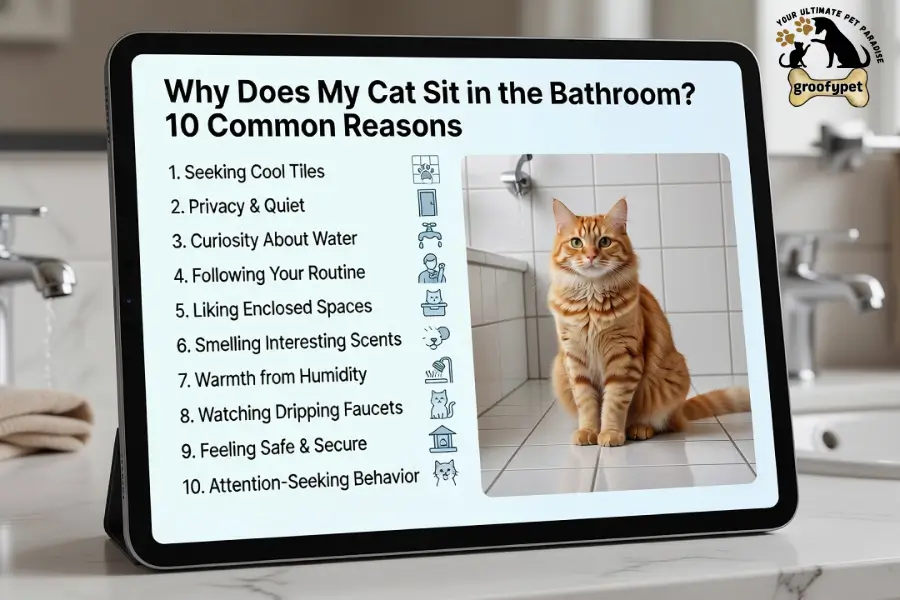
Have you ever wondered why your cat follows you into the bathroom, sits beside the bathtub, or waits outside the door? You are not alone. Many cat owners notice this unusual but often harmless behavior.
So, why does my cat sit in the bathroom? Cats may enjoy the cool floor, seek attention from their owners, feel comfortable in quiet spaces, or become curious about running water. Some cats also develop bathroom habits because they enjoy following their favorite person around the house. The reason depends on your cat’s personality, surroundings, and daily routine.
In most cases, there is no reason to worry. However, if your cat suddenly starts hiding in the bathroom or shows other changes in behavior, it is worth paying closer attention.
Let’s explore the most common reasons cats love bathrooms, how to understand your cat’s behavior, and when you should contact a veterinarian.
Why Does My Cat Sit in the Bathroom?
Cats often sit in bathrooms because they find the space comfortable, interesting, or relaxing. Cool tiles, familiar scents, running water, and the presence of their owners can make the bathroom an attractive place to explore or rest.
Some cats also enjoy enclosed spaces where they can observe their surroundings without too much disturbance. If your cat has always enjoyed visiting the bathroom and behaves normally otherwise, this habit is usually nothing to worry about.
However, a sudden change in bathroom behavior, especially when accompanied by appetite changes, unusual hiding, or urinary problems, deserves attention.
10 Reasons Your Cat Likes Sitting in the Bathroom
Cats may enjoy sitting in the bathroom because it offers a quiet space, interesting smells, and cool surfaces to explore. From seeking your attention to enjoying privacy, there are several reasons your cat may find the bathroom so appealing.
1. Your Cat Likes the Cool Bathroom Floor
One simple reason cats sit in bathrooms is that they enjoy the cool surface beneath their paws.Bathroom floors are often made from ceramic tiles, porcelain, or stone. These materials can feel cooler than carpets, blankets, and upholstered furniture, especially during warm weather.
Your cat may stretch out on the floor, curl up near the bathtub, or settle beside the sink because the surface feels comfortable.Cats also change their resting locations depending on the temperature. During warmer months, your cat might prefer the bathroom floor over a sunny windowsill or a soft bed.
How to tell: If your cat visits the bathroom more often on hot days and lies flat on the tiles, it may simply be looking for a comfortable place to rest.
Make sure your cat always has access to fresh water and a cool, safe resting area. If your home becomes excessively hot, help your cat move to a cooler environment.
2. Your Cat Wants to Be Near You
Does your cat follow you into the bathroom every time you enter? Your cat may simply enjoy your company. Many cats form strong social bonds with their owners and like to stay nearby, even when their owners are doing ordinary household activities. Although cats have a reputation for being independent, they can be affectionate and enjoy spending time with familiar people. Following you from room to room may be one way your cat maintains that connection.
Some cats wait beside the bathroom door, while others walk inside and sit near your feet. Your cat might even settle on the bath mat while you get ready.This behavior does not necessarily mean your cat has separation anxiety. It can be a normal expression of social interest and familiarity.
How to tell: Notice whether your cat follows you into other rooms, rests nearby, or seeks attention throughout the day. If so, companionship may be one reason for its bathroom visits.
3. Your Cat Enjoys Running Water
Many cats show interest in running water, particularly when it comes from a bathroom faucet. Your cat might jump onto the sink, watch water dripping from the tap, or wait near the bathtub when you turn on the shower. Moving water creates sounds and visual movement that can attract a curious cat. Some cats also prefer drinking from flowing water, although preferences vary considerably between individuals.
Your cat may associate the bathroom with the opportunity to watch water, drink from a faucet, or investigate the sink after someone has used it.However, not every cat that enjoys the bathroom is interested in water. Your cat might prefer the room for entirely different reasons.
How to tell: Watch whether your cat becomes more interested when you turn on the faucet or enters the room shortly after hearing running water.
If your cat enjoys flowing water, consider providing a clean pet water fountain. Always make sure it has fresh water and is cleaned regularly.
4. Your Cat Wants Your Attention
Cats quickly learn which behaviors attract attention from their owners. For example, if your cat enters the bathroom and you immediately pet it, talk to it, or offer a treat, your cat may begin repeating that behavior. Even small reactions can reinforce a habit. Your cat might discover that sitting beside the sink gets you to stop what you are doing and interact with it.
Some cats also meow outside a closed bathroom door because they want you to open it. This does not mean your cat is deliberately trying to annoy you. It may simply have learned that bathroom visits often lead to attention.
How to tell: If your cat looks at you, meows, rubs against your legs, or follows you around the room, it may be looking for interaction.
Try providing regular play sessions and affection throughout the day. This helps meet your cat’s social needs without making every bathroom visit an important event.
5. Your Cat Finds the Bathroom Quiet
Bathrooms can provide a peaceful place away from busy household activities. If your home has children, visitors, other pets, or frequent noise, your cat may choose the bathroom when it wants a break. Cats often appreciate having places where they can rest without being disturbed. A quiet bathroom may offer temporary relief from loud conversations, television sounds, or other household activity.
Some cats also prefer rooms where they can observe their surroundings without being approached repeatedly. However, a cat that suddenly spends most of its time hiding in the bathroom may be experiencing stress, discomfort, or illness.
How to tell: Notice whether your cat visits the bathroom more frequently during noisy periods or when visitors arrive.
You can help by providing a quiet resting area elsewhere in the house. Include a comfortable bed, a hiding place, and easy access to food, water, and a clean litter box.
6. Your Cat Is Curious About Bathroom Activities
Cats are naturally curious animals. Bathrooms contain many interesting sights, sounds, and objects. Your cat might investigate the toilet flushing, watch the shower curtain move, sniff towels, or explore the sink after you finish washing your hands. Opening and closing doors can also make the room more interesting.
If your cat cannot access the bathroom whenever it wants, the closed door may increase its curiosity. Some cats enjoy sitting in the room simply because something different happens there every day. For example, your cat may watch you brush your teeth in the morning and return later to investigate the sink.
How to tell: If your cat looks around, sniffs objects, watches moving water, or explores different corners, curiosity may explain its behavior.
Keep potentially dangerous items out of reach. Razors, medications, cleaning products, dental floss, and small objects can pose risks if your cat chews or swallows them.
7. Your Cat Likes Small or Enclosed Spaces
Cats often enjoy spaces that provide shelter while allowing them to observe their surroundings.A bathroom may contain several attractive resting spots, including the area beside the toilet, the space under a vanity, or the bathtub when it is dry and empty.These locations may feel sheltered and help your cat relax.
Cats also differ in their preferences. One cat may enjoy stretching across an open bathroom floor, while another prefers sitting inside a cardboard box or hiding behind a basket.The bathroom is not automatically a safe hiding place, but it may offer the kind of environment your cat prefers.
How to tell: If your cat regularly chooses covered corners, small spaces, or quiet areas throughout your home, it may prefer sheltered resting places.
Consider providing a cat bed with raised sides or a suitable hiding box in a quiet room. Make sure the space is comfortable and allows your cat to leave whenever it wants.
8. Your Cat Is Following a Daily Routine
Cats often develop predictable habits around their owners’ schedules. If you usually enter the bathroom at the same time every morning, your cat may learn to expect this routine. Eventually, it might begin waiting outside the door before you arrive.Your cat may also associate bathroom visits with feeding time, playtime, or the start of your workday.
Once a behavior becomes part of a familiar routine, cats may repeat it regularly. This can explain why your cat appears in the bathroom even when nothing particularly interesting seems to be happening.
How to tell: Notice whether your cat visits at the same times each day or follows you during familiar activities.
If your cat appears relaxed, eats normally, plays, and uses the litter box without difficulty, a predictable bathroom routine is usually harmless.
9. Your Cat Is Attracted to Familiar Scents
Cats use their sense of smell to explore their surroundings and recognize familiar environments. Your bathroom contains many household scents, including your personal scent on towels, clothing, and frequently touched surfaces. These familiar smells may make the room interesting or comforting to your cat.Cats also use scent marking as part of their normal communication.
When your cat rubs its cheeks against your legs or nearby objects, it may be depositing scent from glands around its face. This behavior helps cats interact with their environment and can occur in many rooms throughout the house. However, there is no guarantee that your cat visits the bathroom specifically because of your scent. Other factors, such as temperature and routine, may be more important.
How to tell: If your cat sniffs towels, rubs against your legs, or settles beside familiar belongings, scent and familiarity may contribute to its interest.
Keep laundry, toiletries, and cleaning supplies stored safely. Avoid allowing your cat to chew towels or swallow strings and fabric.
10. Your Cat Wants to Explore or Play
Bathrooms can become interesting play areas for curious cats.Toilet paper rolls, bath mats, dangling shower curtains, and moving objects may attract your cat’s attention.Some cats enjoy pawing at bath mats or investigating the space behind a shower curtain. Others may chase small objects that roll across the floor.
Your cat might also associate the bathroom with your attention because you often stop to interact with it there.Although play is normal, bathrooms contain hazards that deserve attention.
How to tell: If your cat bats at objects, explores corners, or becomes excited when something moves, play and curiosity may be major reasons for its visits.
Provide safe toys, puzzle feeders, and regular interactive play sessions. Store toilet paper and small objects securely if your cat tends to chew or swallow them.
Also Read : Why Do Cats Flop Down in Front of You? 9 Reasons Explained
Why Does My Cat Follow Me Into the Bathroom?
Your cat may follow you into the bathroom because it enjoys your company, wants attention, or has learned your daily routine.Cats sometimes follow their owners around the house because familiar people provide companionship and predictable interactions. Your cat may also be curious about what happens behind a closed door.
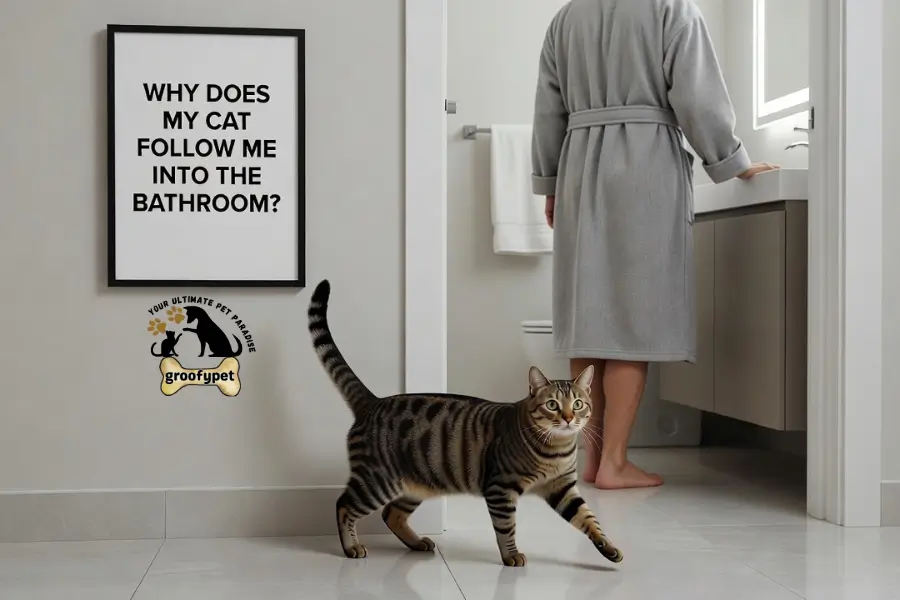
If your cat waits outside the bathroom and enters as soon as you open the door, it may simply want access to the room.Some cats also prefer to keep their favorite person within sight. This can be normal social behavior rather than a sign of anxiety.If your cat seems relaxed and behaves normally when you leave the house, there is generally no reason to interpret bathroom following as a problem.
However, if your cat becomes extremely distressed whenever you leave its sight, destroys objects when alone, or shows other persistent signs of distress, speak with your veterinarian about possible behavioral concerns.
Why Does My Cat Sit Outside the Bathroom Door?
A cat sitting outside the bathroom door may be waiting for you, investigating an unfamiliar sound, or hoping to enter a room it cannot currently access.Cats are often interested in restricted spaces. A closed door prevents them from seeing what is happening inside, which can make the room more intriguing.
Your cat may also recognize the sound of your footsteps or associate bathroom visits with attention.Some cats wait quietly, while others meow, scratch, or push their paws beneath the door.If you prefer privacy, you can usually keep the door closed without harming your cat. Make sure it has access to its essential resources and comfortable resting areas.
If your cat becomes distressed whenever a door closes, gradual training and rewarding calm behavior may help.
Why Does My Cat Sit in the Bathroom Sink or Bathtub?
Cats may sit in bathroom sinks or bathtubs because these spaces offer smooth surfaces, interesting shapes, and opportunities to explore.A sink can feel like a sheltered resting place for a cat that enjoys curling up in small spaces. The surface may also feel cooler than a blanket or upholstered chair.
Bathtubs provide a larger, enclosed area where some cats can stretch out or observe the room.Other cats are interested in water droplets left behind after someone takes a shower or washes their hands.Not every cat enjoys these places. Some dislike slippery surfaces, loud plumbing noises, or the sensation of getting wet.
To keep your cat safe, never leave it unattended around a filled bathtub. Keep toilet lids closed when appropriate and prevent access to unsafe standing water or cleaning products.
Must Read : Why Do Cats Bite When Grooming? Shocking Truth!
Why Does My Cat Sit in the Bathroom When I Shower?
Your cat may sit in the bathroom while you shower because it is curious about the sound of running water, the movement of the shower curtain, or your presence.Some cats prefer to watch from the doorway, while others sit on the bath mat or beside the sink.Steam and warm air may also make the room feel different from the rest of the house. However, cats do not all enjoy warm, humid environments, and many prefer to stay well away from the shower.
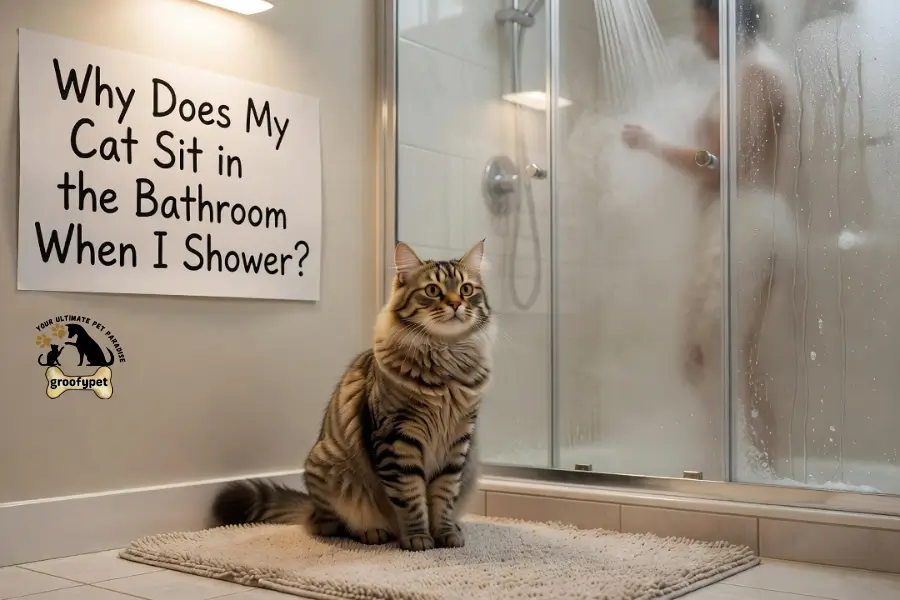
If your cat watches you shower, there is usually no need to discourage the behavior as long as it stays in a safe location.Keep your cat away from hot water, slippery surfaces, and shower products. Never force a cat to enter the shower or expose it to water if it appears frightened.
Is It Normal for Cats to Spend a Lot of Time in the Bathroom?
Yes, spending time in the bathroom can be normal for some cats.A cat that enjoys cool tiles, quiet surroundings, or following its owner may visit the bathroom several times a day. Other cats may rarely enter the room.The important factor is whether the behavior is consistent with your cat’s usual habits.
If your cat has always enjoyed sitting beside the bathtub and continues eating, playing, sleeping, and using the litter box normally, the behavior is generally not concerningHowever, a sudden change deserves more attention.
For example, a cat that previously slept on the sofa but suddenly spends most of the day hiding in the bathroom may be stressed or unwell.
Watch for additional changes, including reduced appetite, unusual vocalization, low energy, vomiting, or changes in urination. Contact your veterinarian if these symptoms appear or if you are concerned about a noticeable change in your cat’s behavior.
When Should You Worry About Your Cat Sitting in the Bathroom?
Bathroom sitting alone is not usually a warning sign. However, it becomes more concerning when it occurs alongside unusual physical symptoms or changes in your cat’s normal behavior.
Pay attention to the following situations.
- Sudden hiding: If your cat suddenly spends most of its time hiding in the bathroom and avoids normal interactions, it may be experiencing stress, pain, or illness.
- Loss of appetite: A cat that stops eating or eats much less than usual needs attention. Contact your veterinarian promptly, particularly if the change continues or other symptoms appear.
- Unusual vocalization: Repeated crying, growling, or distressed meowing may indicate discomfort, although the meaning depends on the circumstances.
- Vomiting or low energy: Repeated vomiting, weakness, or unusual lethargy should not be dismissed as ordinary behavior.
- Changes in litter box habits: Frequent trips to the litter box, straining, or producing unusually small amounts of urine can signal a urinary problem.
An Important Warning About Urinary Problems
If your cat repeatedly tries to urinate but produces little or no urine, seek emergency veterinary care immediately. Do not wait to see whether the problem resolves on its own.
- A urinary blockage can become life-threatening, particularly in male cats.
- Other warning signs can include crying while trying to urinate, repeatedly licking the genital area, restlessness, and vomiting. Do not assume your cat is constipated without a veterinary assessment.
- If you notice these signs, the concern is not simply that your cat is sitting in the bathroom. It is the possibility that your cat is having difficulty urinating.
How to Make Your Bathroom Safe and Comfortable for Your Cat
If your cat enjoys spending time in the bathroom, a few simple precautions can make the space safer.
- Keep cleaning products secured. Store bleach, disinfectants, drain cleaners, detergents, and other household chemicals in closed cupboards. Follow product labels and prevent your cat from walking on freshly treated surfaces until they are safe.
- Put medications away. Human medicines and some personal care products can be dangerous to cats. Keep them in closed storage rather than on the sink or counter.
- Remove sharp objects. Store razors, scissors, nail clippers, and other sharp tools where your cat cannot reach them.
- Close the toilet lid when appropriate. This helps prevent accidental access to toilet water and reduces the risk of small kittens falling into the bowl.
- Watch standing water. Never leave your cat unsupervised around a filled bathtub or a deep basin of water.
- Keep small objects out of reach. Dental floss, hair ties, cotton swabs, and similar items can cause problems if swallowed.
- Provide fresh drinking water. If your cat likes bathroom faucets, offer a clean water bowl or a properly maintained pet fountain elsewhere in the home.
- Prevent slipping. A secure, washable bath mat can provide better footing, provided your cat does not chew or swallow its fibers.
Your cat does not need a special bathroom arrangement to be happy. The goal is to let it explore safely while ensuring that its everyday needs are met.
How to Tell Why Your Cat Likes the Bathroom
If you want to understand your cat’s bathroom habits, observe what happens before, during, and after each visit.Instead of assuming a single explanation, look for patterns that may reveal what your cat enjoys about the room.
| What you notice | Possible explanation |
|---|---|
| Your cat lies flat on the tiles during hot weather | It may prefer a cooler resting surface. |
| Your cat follows you into several rooms | It may enjoy companionship or attention. |
| Your cat becomes interested when the faucet runs | It may be curious about moving water. |
| Your cat visits during noisy household activities | It may be seeking a quieter place. |
| Your cat waits outside the door every morning | It may have learned your daily routine. |
| Your cat explores the sink and bathtub | It may enjoy investigating different spaces. |
| Your cat suddenly hides in the bathroom | Stress, discomfort, or illness may be contributing. |
These clues are useful starting points, not definite diagnoses.Pay attention to your cat’s body language. A relaxed cat may rest with loose muscles, groom itself, or settle comfortably. A frightened or uncomfortable cat may crouch tightly, flatten its ears, avoid interaction, or remain unusually withdrawn.
Consider the entire picture rather than relying on one behavior.For example, a cat that regularly sits on the bathroom floor and then returns to play is different from a cat that suddenly hides there and refuses food.
If the behavior is new, persistent, or accompanied by other symptoms, contact your veterinarian for guidance.
Myth vs. Fact: Understanding Bathroom Behavior
- Myth: Every cat that sits in the bathroom has separation anxiety.
- Fact: Many cats simply enjoy their owner’s company or have developed a familiar routine. Bathroom visits alone do not establish separation anxiety.
- Myth: Cats always sit on bathroom tiles because they are too hot.
- Fact: Cool surfaces may be appealing, but curiosity, comfort, attention, and other factors can also explain the behavior.
- Myth: A cat that hides in the bathroom is always sick.
- Fact: Cats sometimes choose quiet places to rest. However, sudden hiding accompanied by physical symptoms should be investigated.
- Myth: A cat that likes bathroom faucets does not need a water bowl.
- Fact: Cats need reliable access to fresh drinking water, even when they enjoy watching or drinking from running taps.
Frequently Asked Questions
Why does my cat sit in the bathroom all the time?
Your cat may enjoy the cool floor, quiet surroundings, familiar scents, or the chance to stay near you. Some cats also develop bathroom routines because they find the room interesting. If the behavior is longstanding and your cat acts normally otherwise, it is usually harmless. Sudden hiding or other unusual symptoms deserve veterinary attention.
Why does my cat follow me into the bathroom?
Your cat may follow you because it enjoys your company, wants attention, or is curious about your activities. Cats can form strong social bonds with familiar people. If your cat follows you throughout the house and appears relaxed, this may simply be part of its normal personality and routine.
Why does my cat sit outside the bathroom door?
Your cat may be waiting for you, following a familiar routine, or trying to investigate a room it cannot access. Closed doors can attract curious cats because they cannot see what is happening inside. If your cat meows or scratches, it may also have learned that these behaviors sometimes get the door opened.
Final Thoughts
If you have been wondering why does my cat sit in the bathroom, the answer may be simpler than you expect. Your cat might enjoy the cool tiles, want to spend time with you, or find the room interesting because of its sounds and smells.Every cat has its own personality and preferences. Observing when your cat visits, where it likes to sit, and how it behaves can help you understand its habits.
Most importantly, pay attention to changes. A cat that has always enjoyed the bathroom is different from one that suddenly begins hiding there or shows signs of illness.Keep the room safe, provide fresh water and comfortable resting places, and let your cat explore within reasonable limits.
Cat Crying When Pooping A Painful Sign Every Pet Owner Knows!
Why Does My Cat Hug My Arm? 10 Vet Reviewed Reasons Explained!