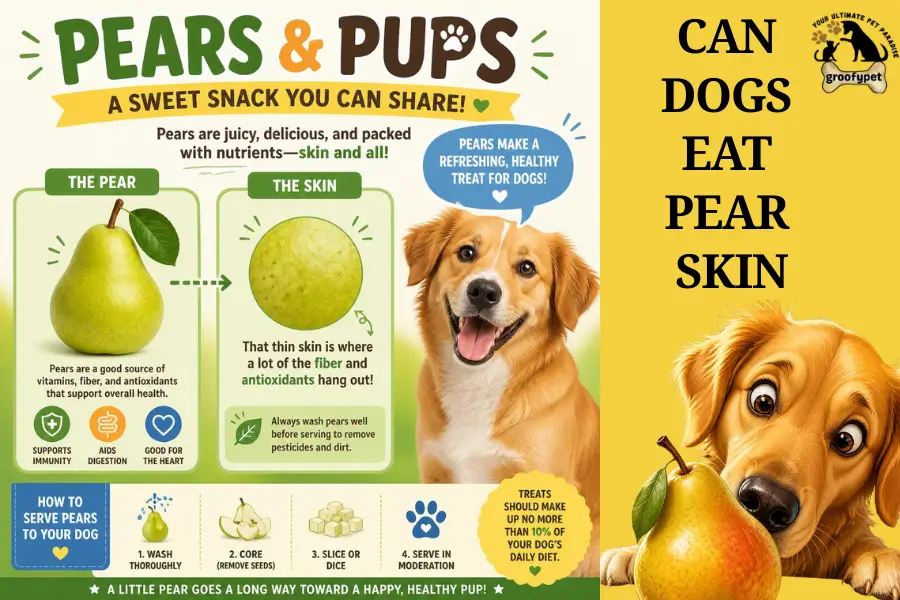
Can dogs eat pear skin? Yes, dogs can eat pear skin. In most cases, it’s perfectly safe, and it even adds a bit of extra fiber, antioxidants, and nutrients to the fruit compared to peeled pear alone. That said, pear skin isn’t automatically the right choice for every dog; some pups with sensitive stomachs may find the extra fiber harder to digest, and the texture can be a choking concern for very small breeds if pieces aren’t cut properly.
Pears are one of the more popular “human foods” that dog owners like to share with their pets. They’re sweet, juicy, low in fat, and packed with vitamins, which makes them an appealing alternative to store-bought treats. But because the skin has a noticeably different texture and fiber content than the soft flesh underneath, a lot of pet parents pause before tossing a whole slice to their dog. Should you peel it first? Is the skin actually digestible? Does it carry any hidden risks the flesh doesn’t?
This guide walks through everything you need to know about feeding pear skin to your dog, the nutritional upside, the potential downsides, how to prepare it safely, how much is appropriate, and what parts of the pear you should never let your dog near.
Quick Answer: Is Pear Skin Safe for Dogs?
Pear skin is generally considered safe for dogs to eat, provided the fruit is fresh, ripe, and washed thoroughly before serving. Nutritionally, the skin is similar to the flesh, but it carries a higher concentration of fiber and certain antioxidants, including zeaxanthin. The main groups who should be more cautious are dogs with known digestive sensitivities, who may experience mild stomach upset from the added fiber, and small or toy breeds, who need pieces cut small enough to avoid choking. For the vast majority of healthy adult dogs, though, pear skin poses no more risk than the flesh itself.
It’s worth noting that “safe” doesn’t mean “unlimited.” Like any fruit, pear should be treated as an occasional treat rather than a dietary staple, and it should always be served with the core, seeds, and stem removed.
Can dogs eat pear skin? Why Do Dog Owners Ask About Pear Skin Specifically?
Most fruit-safety questions for dogs focus on whether the whole fruit is okay grapes, for example, are toxic regardless of whether you peel them. Pears are a little different because the flesh and skin have distinct textures, and because some fruits (like apples) are typically recommended with the skin left on, while others get peeled out of habit.
The confusion tends to come from a few directions:
- Texture concerns. Pear skin is noticeably tougher and slightly grainy compared to the soft, almost buttery flesh. Owners sometimes assume “tougher” automatically means “harder to digest” or “less safe,” which isn’t quite accurate for pear skin specifically.
- General caution around fruit skins. Some fruits do have skins that are best avoided for dogs (or humans), so it’s a reasonable instinct to double-check rather than assume.
- Sensitive dogs. Owners of dogs with a history of stomach issues are understandably more cautious about anything with extra fiber or roughage.
- Pesticide worries. Since the skin is the outermost layer of the fruit, it’s the part most likely to carry residue from spraying or handling, which raises legitimate washing concerns.
The good news is that none of these concerns point to pear skin being unsafe; they just point to a few extra precautions worth taking, which we’ll cover below.
Nutritional Benefits of Pear Skin for Dogs
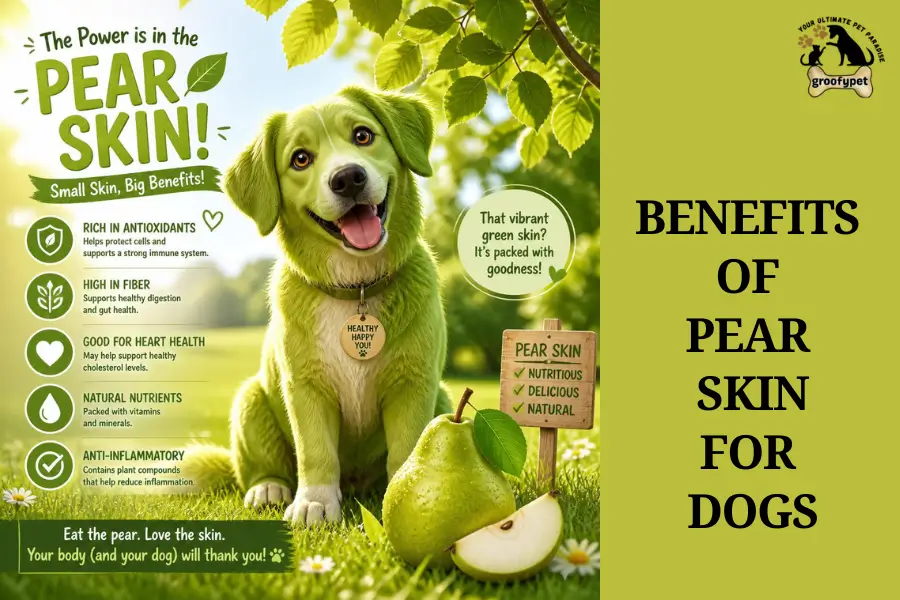
Pear skin isn’t just “not harmful”; it actually contributes some nutritional value on top of what the flesh provides.
Dietary Fiber
A large share of a pear’s fiber content sits in and just beneath the skin. A whole pear contains roughly six grams of fiber, and much of that is lost if the fruit is peeled before serving. Fiber plays an important role in canine digestion; it helps regulate bowel movements, supports a healthy gut microbiome, and can contribute to a longer-lasting feeling of fullness, which is useful if your dog is prone to begging between meals.
For dogs on a normal, healthy diet, the added fiber from pear skin is generally a mild positive. It’s really only a concern for dogs whose digestive systems are already sensitive or prone to irritation.
Vitamin A and Zeaxanthin
Pear skin contains vitamin A, which plays a role in maintaining healthy skin, a shiny coat, and good vision. It’s also one of the primary sources of zeaxanthin in the fruit, an antioxidant carotenoid associated with eye health. Zeaxanthin is concentrated close to the skin, so removing the peel significantly reduces how much of it your dog actually gets from the fruit.
Vitamin C and General Antioxidants
Vitamin C, found throughout the pear, including the skin, supports immune system function. While dogs can produce their own vitamin C internally (unlike humans, who must get it from diet), a small dietary boost from fruits like pears doesn’t hurt and may offer some additional antioxidant support, particularly for senior dogs or those under physical stress.
Low-Calorie, Low-Fat Treat Option
Compared to many commercial dog treats, pear (skin included) is low in fat and calories relative to its volume, which makes it a reasonable option for dogs who need to watch their weight, as long as portions stay modest. The fiber content can also help dogs feel satisfied with a smaller amount of food.
Potential Risks of Feeding Pear Skin
While pear skin is safe for the majority of dogs, it’s not entirely risk-free, and it’s worth understanding the specific scenarios where caution is warranted.
Digestive Sensitivity
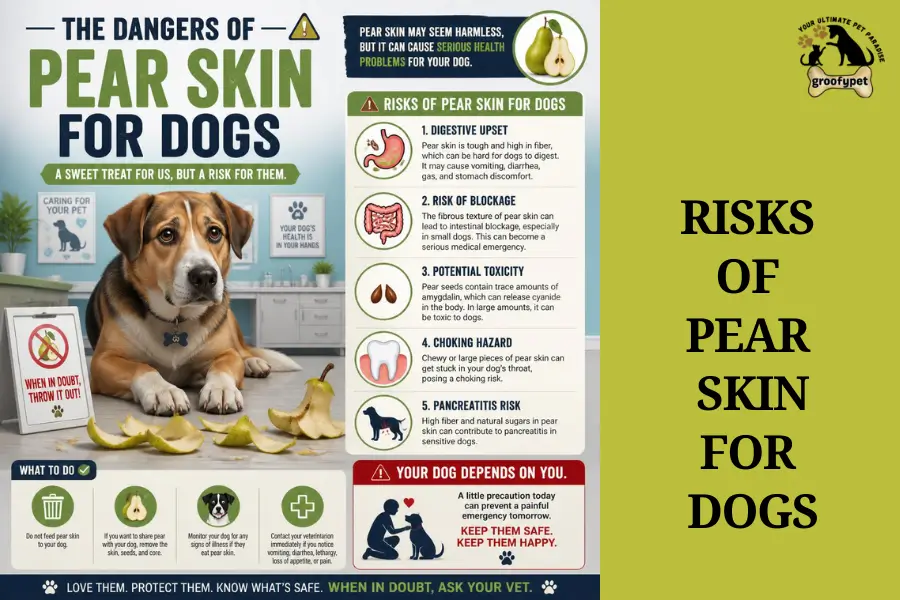
The fiber concentrated in pear skin, while generally beneficial, can be tougher on a sensitive digestive system than the soft flesh alone. Dogs with a history of gastrointestinal issues, inflammatory bowel conditions, or a generally “sensitive stomach” may be more prone to mild upset, including gas, bloating, or loose stools, after eating pear skin, especially in larger amounts or if it’s introduced too quickly.
This doesn’t mean these dogs can never have pears. It usually just means peeling the fruit first or offering a smaller portion than you would for a dog with no digestive history.
Pesticide and Residue Exposure
Because the skin is the outer layer of the fruit, it’s the part most exposed to pesticide residue, wax coatings, or handling during transport and display at the store. This is true for pears intended for human consumption as well, but it’s an easy risk to reduce: a thorough rinse under running water before serving removes most surface residue. If you’re especially cautious, look for organic pears or give the skin a gentle scrub.
Choking Hazard in Small Dogs
Pear skin adds a bit of extra toughness and grip compared to the flesh alone, which can make pieces slightly harder to chew through cleanly. For small or toy breeds, or for any dog that tends to gulp food rather than chew it, this makes proper portioning especially important. Pieces should be cut small enough that they can’t lodge in the throat, and larger dogs that eat quickly should still have their pear cut down rather than being given a whole slice.
Overfeeding and Sugar
Pears, like most fruits, contain natural sugars. While this isn’t a toxicity concern, it does mean pear shouldn’t be a daily, high-volume treat, particularly for dogs who are overweight, prediabetic, or diabetic. The fiber in pear (including the skin) does help slow sugar absorption somewhat compared to a low-fiber sugary treat, but moderation still matters.
How to Prepare Pear Skin Safely for Your Dog
Preparing pear the right way significantly reduces any of the risks above. Here’s a simple, repeatable process:
- Choose a ripe, fresh pear. Avoid pears that are overly hard (harder to chew and digest) or overripe to the point of fermentation, which can upset a dog’s stomach.
- Wash the pear thoroughly under running water, gently rubbing the skin to remove dirt, wax, or pesticide residue. A soft produce brush can help if the skin feels waxy.
- Remove the stem. It’s tough and fibrous and offers no nutritional benefit; there’s no reason to risk it as a choking hazard.
- Cut the pear in half and remove the core and seeds. This is the most important step, since the core and seeds present the real safety risks (more below).
- Slice the remaining pear, skin included, into bite-sized pieces appropriate to your dog’s size. A good general guideline is pieces roughly the size of a training treat for smaller dogs, with slightly larger pieces acceptable for large breeds.
- Offer a small amount first. The first time you give your dog a pear, start with just one small piece and wait a few hours to see how they react before offering more.
- Peel if needed. If your dog has a known sensitive stomach, or if you notice mild digestive upset after a skin-on serving, try peeling the pear next time and see if that resolves the issue.
What Parts of the Pear Are Unsafe?
While the flesh and skin are both fine for dogs, several parts of the pear should always be removed before serving.
Seeds
Pear seeds contain trace amounts of cyanogenic compounds, which release cyanide when broken down or chewed the same category of concern that applies to apple seeds. A dog would need to consume a large quantity of crushed seeds to experience serious toxicity, and an accidental swallow of one or two intact seeds is unlikely to cause harm in most dogs. Still, because there’s no upside to the risk, seeds should always be removed before offering pear.
Core
The core is dense, fibrous, and much tougher to chew than the surrounding flesh. Beyond housing the seeds, it presents its own choking and blockage risk, particularly in smaller dogs. A swallowed piece of core can potentially cause an intestinal obstruction, which is a legitimate emergency if it happens.
Stem
Like the core, the stem is tough and fibrous with no nutritional value. It’s an easy piece to overlook when slicing a pear quickly, so it’s worth double-checking that it’s fully removed before handing a slice to your dog.
Leaves
If you happen to have pear leaves around (for instance, from a home-grown pear tree), keep these away from your dog as well. Similar to the seeds, they contain trace cyanogenic compounds and offer no benefit.
Safe vs. Unsafe Pear Parts
| Pear Part | Safe for Dogs? | Notes |
|---|---|---|
| Flesh | Yes | Hydrating, mildly sweet, easiest to digest |
| Skin | Yes, in moderation | Adds fiber and antioxidants; peel if your dog has a sensitive stomach |
| Seeds | No | Contains trace cyanogenic compounds; also a choking hazard |
| Core | No | Tough, hard to digest, choking/blockage risk |
| Stem | No | Fibrous, no nutritional value, choking risk |
| Leaves | No | Trace cyanogenic compounds |
| Canned pears | Generally no | Usually packed in sugar or syrup |
How Much Pear Can a Dog Eat?
As with any treat, portion size matters. A commonly cited general guideline is that treats, including fruit, should make up no more than about 10% of a dog’s total daily caloric intake, with the remaining 90% coming from a complete and balanced dog food.
For pear specifically, a reasonable starting portion is a piece about 1 inch wide by 1/4 inch thick, adjusted up or down based on your dog’s size:
- Small dogs (under 20 lbs): One or two small pieces, no more than once or twice a week to start.
- Medium dogs (20–50 lbs): A few small-to-medium pieces at a time.
- Large dogs (50+ lbs): A slightly larger portion, though still modest relative to their overall diet.
Regardless of size, it’s best to introduce pear gradually. Offer a small piece, wait to see how your dog’s digestion responds over the following day, and only increase the amount if there’s no sign of upset.
Canned Pears vs. Fresh Pears
Fresh, ripe pears are the better choice for dogs by a wide margin. Canned pears are typically packed in sugar-heavy syrup or juice concentrate, along with preservatives that offer no nutritional benefit and can contribute to gastrointestinal upset if fed in any real quantity. Regularly feeding sugary canned fruit can also contribute to weight gain or blood sugar issues over time, particularly in dogs who are already overweight or managing diabetes.
If fresh pear isn’t available and you want to offer a similar treat, frozen pear pieces (without added sugar) are a reasonable alternative and can even double as a cooling summer treat.
Are Asian and Korean Pears Different?
Asian pears (sometimes called apple pears) and Korean pears are safe for dogs using the same guidelines as common European pear varieties. They tend to have a crisper, more apple-like texture and are generally less sweet. The same core rules apply:
- Wash the skin thoroughly before serving.
- Remove the core and seeds.
- Cut into bite-sized pieces appropriate for your dog’s size.
- Introduce gradually and watch for any digestive reaction.
Because Asian pears are firmer than traditional pears, take a little extra care when portioning for small dogs, since the added crunch can make pieces slightly harder to break down.
Signs of an Upset Stomach After Eating Pear
Even when prepared correctly, individual dogs can react differently to new foods. After introducing pear skin for the first time, watch for:
- Vomiting — especially if it happens shortly after eating or repeats more than once.
- Diarrhea or unusually loose stools — a common sign of digestive sensitivity to added fiber or a new food.
- Decreased appetite — a dog that seems less interested in food after eating pear may be experiencing mild stomach discomfort.
- Excessive gas or bloating — often linked to the added fiber, especially if the portion was larger than your dog is used to.
- Lethargy — general low energy following a new treat can be worth monitoring, though it’s less common with pear specifically.
Mild symptoms that resolve within a day usually aren’t cause for alarm, but they’re a good signal to reduce the amount (or switch to peeled pear) going forward. If symptoms are severe, persistent, or accompanied by other concerning signs, contact your veterinarian.
When to Talk to Your Vet Before Feeding Pear
While pear is considered a low-risk treat for most healthy dogs, there are situations where it’s worth checking with your veterinarian first:
- Your dog has diabetes or is prediabetic, given the natural sugar content in pear.
- Your dog has a history of pancreatitis, since high-fiber or unfamiliar foods can sometimes trigger flare-ups in sensitive dogs.
- Your dog has chronic gastrointestinal issues or is on a prescription diet.
- Your dog is very young (a puppy still transitioning onto solid food) or a senior with known digestive fragility.
- You’re introducing pear for the first time and want general reassurance about portion size for your dog’s specific breed and weight.
A quick check-in with your vet costs little and can help you feel confident about adding pear (or any new fruit) to your dog’s routine.
Other Ways to Serve Pear to Your Dog
If your dog enjoys pear, there are a few creative, dog-safe ways to serve it beyond simply handing over sliced pieces:
- Frozen pear cubes — a refreshing treat on hot days.
- Grated pear mixed into homemade dog treats — a natural way to add mild sweetness without refined sugar.
- Pear “pupsicles” — small pieces of pear frozen into ice cubes or blended with plain, dog-safe yogurt for a frozen summer snack.
- Mashed pear as a food topper — a small spoonful mixed into regular dog food for dogs who need encouragement to eat.
As with any preparation method, always remove the core, seeds, and stem first, and keep portions modest.
How Pears Compare to Other Dog-Safe Fruits
If you’re building out a rotation of fruit treats for your dog, it helps to know how pears stack up against other common options.
- Apples. Like pears, apple flesh and skin are safe for dogs, while the core and seeds should be removed due to similar trace cyanogenic compounds. Apples tend to be slightly firmer and more acidic than pears.
- Bananas. Bananas are safe and easy to digest but higher in sugar and calories per bite than pears, so portions should be smaller.
- Blueberries. A low-calorie, antioxidant-rich option that’s easy to portion out as a training treat, with no skin or seed concerns to worry about.
- Watermelon. Safe in flesh form, but the rind and seeds should be removed, similar to the precautions needed with pear cores and seeds.
- Strawberries. Safe in moderation, with a natural sugar content similar to pear, so the same “treat, not staple” rule applies.
Pears fit comfortably into this same general category: a fruit that’s safe and beneficial in moderation, with a few parts (core, seeds, stem) that need to be removed before serving. Rotating between a few of these fruit options can help keep treat time varied without overloading your dog on any single type of sugar or fiber.
Common Mistakes Owners Make When Feeding Pear
A few avoidable mistakes account for most of the pear-related issues dogs experience:
- Feeding a whole pear at once. Even if the core and seeds are removed, a large piece of pear can be too much for a dog’s system to handle in one sitting, especially for smaller dogs.
- Skipping the wash step. Rushing straight from fruit bowl to dog bowl without rinsing the skin leaves pesticide residue and surface dirt in place.
- Not checking for a fully removed core. It’s easy to miss a stray seed or a chunk of core when slicing quickly a careful second look before serving is worth the extra few seconds.
- Feeding pear too frequently. Treating pear as a daily addition rather than an occasional one can tip a dog’s diet out of balance over time, even though pear itself isn’t harmful.
- Ignoring early signs of digestive upset. Continuing to feed pear skin after a dog shows mild symptoms, rather than scaling back or peeling the fruit, can turn a minor issue into a more persistent one.
Avoiding these simple mistakes is usually enough to keep pear a safe, enjoyable treat rather than a source of problems.
Final Takeaway
Can dogs eat pear skin? Pear skin is generally safe for dogs and, in most cases, adds beneficial fiber and antioxidants compared to peeled pear alone. The real safety concerns with pears lie in the core, seeds, and stem, not the skin itself, which most healthy dogs tolerate well. To feed pear safely: wash it thoroughly, remove the stem, core, and seeds, cut it into appropriately sized pieces for your dog, and introduce it gradually while watching for any signs of digestive upset.
If your dog has a sensitive stomach, a chronic health condition, or you’re simply unsure how they’ll react, peeling the pear or starting with a very small portion is a sensible precaution. And as always, when in doubt about a new food, a quick conversation with your veterinarian is the best way to make sure pear is a good fit for your dog’s individual diet and health needs.
Can Dogs Eat Bilimbi? Safety, Benefits, Risks, and Feeding Guide
Can Dogs Eat Plumcots? Safety, Benefits, Risks and Feeding Guide