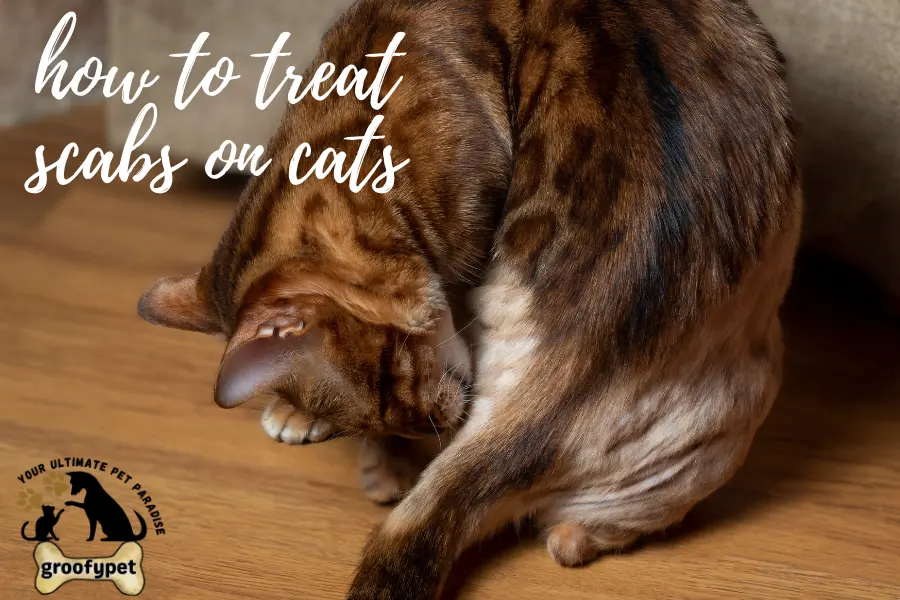
Have you seen scabs, blisters or rough patches on your cat skin? How to treat scabs on cats?Your cat might have scabs which can show up in one spot or all over the body. There are different types of cat scabs, and each one has a different cause. Some might be from allergies, flea bites or skin infections. The good news is that there are a few simple home remedies you can try like giving your cat a bath with homemade oatmeal shampoo to soothe the skin.
But before you treat it.It is a good idea to learn what’s causing the scabs and what signs to look for.
How to treat scabs on cats?
When a cat’s skin gets irritated it causes inflammation, redness, itching and sometimes swelling which leads to excessive scratching or grooming. This reaction can damage the skin and create scabs found on the neck, back or base of the tail sometimes along with hair loss or thinning fur.
The best way to spot cat scabs is by gently checking your cat skin and coat but it is important to confirm from a vet and take guidance treatment. How to treat scabs on cats?If these scabs can turn into secondary infections due to broken skin and bacterial exposure from constant scratching.

Secondary infections may cause the rashes to worsen and spread leading to more serious skin problems like extensive hair loss and stubborn sores.How to treat scabs on cats? In some cases cat scabs can signal underlying conditions such as feline miliary dermatitis triggered by food allergies, flea infestations or a ringworm infection.
That’s why it’s important to treat cat scabs promptly to stop irritation and help restore your cat’s healthy skin.
What Causes Cat Scabs?
Cat scabs are most often caused by flea bites, allergies and excessive grooming due to stress or irritation. When a cat scratches, licks, or bites the same spot repeatedly it can break the skin and lead to scabbing. You’ll typically notice these scabs along the neck or back especially near the tail base.
Common Types of Cat Scabs
1. Chin Scabs
Chin Scabs usually triggered by feline acne, chin scabs appear as clusters of small, irritated bumps under the chin. Though the exact cause is unclear, stress and a poor diet are thought to play a role. Cats that eat from plastic bowls suffer from chin acne, as bacteria can build up and irritate the skin. Replacing plastic with glass, porcelain, or stainless steel bowls may help reduce flare-ups.
2. Stress Scabs
Cats experiencing stress often resort to over-grooming, which can lead to open sores and scabs across their body. Signs your cat might be stressed include hiding, lethargy, trembling, loss of appetite, diarrhea, litter box avoidance, and clingy behavior. They might also scratch inappropriate surfaces like wood or furniture, further damaging their skin. Addressing the source of stress can help minimize grooming-related scabs.
3. Non-Seasonal Scabs
If your cat has scabs throughout the year, allergies or dermatitis could be the cause. Common triggers in your cat’s environment include shampoo, plants, medication, or soap, which can lead to skin irritation. Keep an eye out for itching and scratching, which are typical signs of an allergic reaction. Switching to hypoallergenic products may help reduce flare-ups.
Along with skin issues, non-seasonal allergies can also show up as:
- SneezingRunny or stuffy noseCoughing.
- Mucus or phlegm in the throatScabs near the back and neck scabs in this area, ranging from tiny bumps (3mm) to larger patches (over 1cm), are often linked to flea bite hypersensitivity.
- They’re especially common around the tail and are some of the most frequently seen scabs in cats.
- A cat allergic to flea saliva may react severely in these spots.
- These scabs can become extremely itchy, leading your cat to scratch or bite until the skin breaks, raising the risk of infection.
Additional signs of a flea problem include:
- Intense scratching or bitingOver-grooming
- Frequent head shaking
- Hair lossRestlessness or avoiding certain areas
Cat has scabs on neck but no fleas
If your cat has scabs on neck but no fleas, it could be a sign of allergies, skin infections, or even stress-related overgrooming. Sometimes, cats react to environmental issues like pollen, dust, or certain foods, which can lead to itchy skin and scabbing.
Even without fleas, past flea bites or flea allergy dermatitis can still cause lingering irritation. Fungal or bacterial infections may also result in scabs, especially if your cat scratches frequently. It’s best to gently check the area for redness or hair loss and consult a vet to rule out any underlying issues or to get a proper treatment plan.
Home Remedies for Cat Scabs
- Before trying any home remedy for your cat’s scabs, it’s important to know what’s causing them.
- Treating the scabs works better when you understand the problem.
- If the scabs don’t get better or start to look worse, you should take your cat to the vet.
- But if you know why your cat has scabs, here are some easy things you can try at home.
- If the scabs are from acne so clean the area gently with an antibacterial soap like chlorhexidine.
- This usually helps the scabs go away pretty fast.
- Just be careful not to dry out your cat’s skin because that can make things worse.
- Some people say to use benzoyl peroxide, but it can be too strong for cats, so check with your vet first.
- Make sure your cat plays and exercises enough to burn off energy.
- When cats have too much energy stuck inside, they can get stressed, which might cause scabs.
- Playing with your cat helps them feel calm.
- You can also try CBD oil to help soothe your cat’s skin.
- It won’t cure stress but can help with irritation.
- You can put CBD drops in your cat’s mouth or mix them into their food or treats.
Scabs Caused by Allergies
How to treat scabs on cats?Allergy scabs can be hard to figure out because they can come from many things. Cluster of scabs on cats neck will be considered as an allergy.Try changing any shampoos, soaps, or laundry detergents your cat touches to hypoallergenic ones. Giving your cat an oatmeal bath can help calm itchy and dry skin. Also, keeping the scabs moisturized will make them less itchy and irritated.
Scabs Caused by Fleas
The best way to stop flea scabs is to prevent fleas in the first place. Flea collars help, and you can also make your own flea powder by mixing equal parts baking soda and salt. Sprinkle this on your carpets or places your cat likes to hang out. This powder dries out flea eggs and larva. Fleas don’t like the smell of cedar chips, so scatter some around your home and yard where your cat plays and sleeps.
Scabs Caused by Food
If you recently changed your cat’s food that might be causing the scabs.
Even if you haven’t changed it, sometimes cats can develop allergies to food they’ve been eating for a while. Try switching to a good, organic cat food. If you’re not sure, it’s best to ask your vet.
Simple home remedies for cat scabs
Scabs make cats itchy and uncomfortable. How to treat scabs on cats?You can help by soothing and moisturizing their skin with natural products or homemade treatments.Warm and soft towel It helps to soften the scab and increase blood flow to the affected area which speeds up healing. Using a clean cloth soaked in warm water and gently holding it on the scab for a few minutes helps to reduce discomfort.
1. Aloe Vera Gel
Pure aloe vera gel is natural and safe for cats known for its soothing and anti-inflammatory properties. Applying a thin layer can calm irritated skin. It reduces redness and helps to prevent bacterial infections. Make sure to use aloe vera without additives or chemicals.
2. Coconut Oil
Virgin coconut oil moisturizes dry skin and contains antibacterial and antifungal properties. Applying a small amount to the affected area can reduce itching and inflammation. It also helps to protect the skin from damage.
3. Chamomile Tea
Rinse Chamomile tea has a natural anti-inflammatory and calming effect. Brew the tea let it cool completely and gently dip it on the scabbed area using a soft cloth or cotton ball. This helps to soothe irritated skin and reduce swelling.
4. Oatmeal Paste
Oatmeal is known for its ability to relieve itching and dryness. When ground into a fine powder and mixed with water to form a paste. It can be applied to the scab to calm inflamed skin. It also acts as a gentle cleanser helping to remove dirt without causing irritation.
5. Calendula Cream
Calendula cream is made from marigold flowers and is well-known for its wound-healing and anti-inflammatory properties. Applying it to cat scabs can speed up recovery and reduce redness. It also helps prevent infection by soothing the damaged skin.
6. Honey
Raw honey has natural antibacterial and healing properties making it effective for minor skin wounds like scabs. A thin layer of honey applied on the affected area can prevent infection and act as a fast healer. Make sure to use pure honey without additives.
7.Apple Cider Vinegar
DilutionDiluted apple cider vinegar (1:1 with water) can be gently applied to the scab to prevent bacterial or fungal growth. It acts as a natural disinfectant but must be avoided on open wounds or skin.
8. Epsom Salt Bath
An Epsom salt bath can help to reduce swelling and clean the scabbed area. Use lukewarm water with a small amount of Epsom salt and soak the affected area. Keep the raea clean regularly cleaning the scab with lukewarm water. The cat-safe soap helps to prevent dirt and bacteria buildup reducing infection risk. Use a soft cloth to gently clean the area avoid scrubbing which can damage the skin.
9. Dry Oatmeal Shampoo
Oatmeal is great for itchy skin, especially if your cat doesn’t like water baths. Bake some oatmeal in the oven at a low temperature, let it cool, then gently rub it into the scabby areas. Leave it on for a few minutes before brushing or wiping it off.
When to See a VetIf home remedies don’t help, take your cat to the vet. They can give medicine, special shampoos, or treatments for fleas or infections to make your cat feel better.
How to prevent cat scabs?
You can help prevent cat scabs by closely monitoring your cat’s environment, behavior, and overall health. However, scabs may still appear unexpectedly in different areas.How to treat scabs on cats? Since there are many reasons behind scabs, prevention methods vary for each cat.
Here are some steps you can take to reduce the risk of skin problems
- Add omega-3 fats to their diet.Keep your cat’s environment free of fleas.
- Remove any food allergens by switching their diet.
- Use metal, glass, or porcelain bowls for food and water.
- Ensure your cat gets regular playtime and exercise.
- Be vigilant for signs like excessive licking, grooming, scratching, itching or other skin issues such as lesions, fur loss or dry patches.
If you notice any of these symptoms, it is important to act quickly to stop scabs .
Also Read : Can I put Aquaphor on my cat
Final Thoughts
how to treat scabs on cats? Cat scabs can result from a variety of causes like allergies, diet changes or stress. Sometimes, scabs or skin problems can be hard to spot so pay close attention to any changes in your cat’s skin or behavior. Early detection allows you to address the issue promptly. If you’re unsure about the cause or how to treat it.Don’t hesitate to visit your vet. The sooner your cat receives proper care, the faster they’ll recover.
Can Cats Eat Beans? The Good, the Bad or Toxic!
Toxic Flowers for Cats: Protect Your Pet Before It’s Too Late!