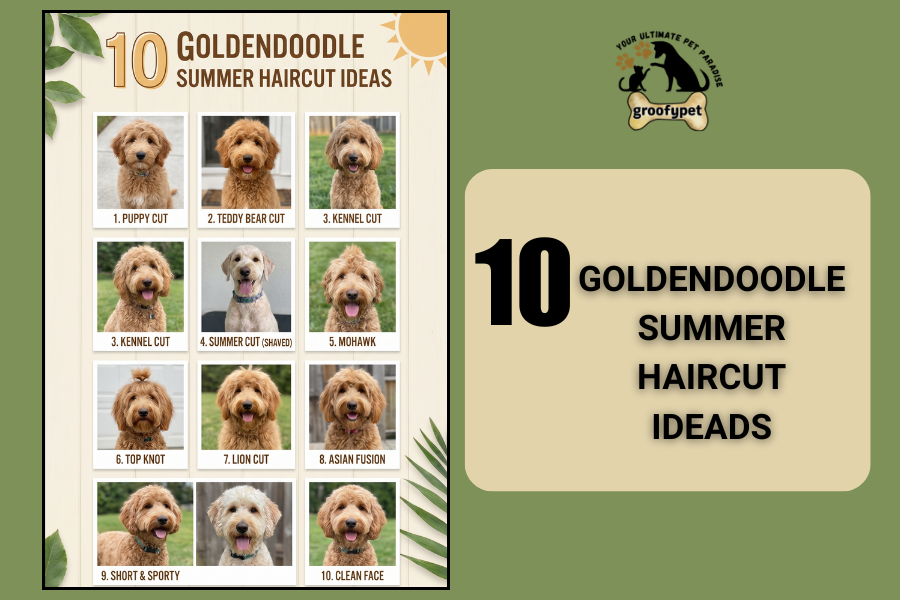
If you share your home with a Goldendoodle, you already know their coat is one of their most defining and demanding features. That blend of Golden Retriever warmth and Poodle curl creates a coat that is equal parts beautiful and high-maintenance. When summer temperatures climb and outdoor activity ramps up, the stakes around grooming get even higher.
A poorly timed or poorly executed summer cut can leave your dog vulnerable to sunburn, overheating, or chronic skin irritation. Get it right, though, and your Goldendoodle moves through the season with comfort, confidence, and a coat that stays manageable between appointments.
This guide covers everything you need to know about the Goldendoodle summer haircut from choosing the right cut style and clipper blade length to understanding how coat type shapes every grooming decision you make.
Why the Right Summer Haircut Matters More Than You Think
Many owners assume that shaving a Goldendoodle in summer is the obvious solution to hot weather. It feels intuitive: less fur, less heat. But that reasoning overlooks the biology of the coat itself.
A Goldendoodle’s coat, whether curly, wavy, or straight, functions as a dual-purpose insulator. In winter it retains warmth. In summer it creates an air-gap buffer between the skin and direct UV radiation, moderating body temperature rather than trapping it.
Strip that coat entirely, and you expose sensitive skin to sunburn, UV damage, and a paradoxical increase in overheating risk.The goal of a goldendoodle summer haircut is not removal; it is strategic reduction.
Trimming to an appropriate length improves air circulation, reduces the coat’s capacity to trap heat, shortens drying time after swimming, and cuts down on the dirt, pollen, and allergens that accumulate during high-activity outdoor months.
Done correctly, it is one of the most effective tools you have for protecting your dog’s comfort and skin health through the hottest months of the year.
Understanding Your Goldendoodle’s Coat Before You Cut
Before selecting a cut style or clipper blade, you need to understand which coat type your dog has inherited. The genetic contribution of each parent breed, Golden Retriever and Poodle, produces three distinct coat textures, each with different grooming requirements.
Curly Coat
Dogs with a dominant Poodle influence typically develop tight, dense curls that are low-shedding but highly prone to matting. Curly coats trap heat more aggressively than the other types and require the most frequent grooming, ideally every four to six weeks during summer months. Without consistent brushing between appointments, matting can become severe enough to pull on the skin, creating chronic irritation.
Wavy Coat
The wavy coat sits between curly and straight in both texture and maintenance demand. It is the most common coat type in Goldendoodles and tends to be forgiving and less prone to matting than curly coats but still requires regular brushing. Wavy coats respond well to most summer cut styles.
Straight Coat
Straight-coated Goldendoodles take more strongly after their Golden Retriever lineage. These dogs may shed more noticeably, particularly during seasonal transitions, but their coats are generally easier to manage and less prone to tangling. Straight coats can tolerate slightly longer summer lengths than curly coats without the same matting risk.
Knowing your dog’s coat type is the starting point for every grooming decision; the cut style, the clipper blade, the brushing frequency, and the bathing schedule all follow from it.
Choosing the Right Clipper Blade for Summer
Clipper blade selection is one of the most consequential decisions in a summer grooming appointment, and it is worth understanding the basics even if you work exclusively with a professional groomer.
- #5 blade — leaves approximately ¼ inch of coat; the standard choice for a summer cut that balances cooling with skin protection
- #7 blade—cuts shorter than a #5; appropriate for dogs in very hot or humid climates, or those with particularly dense coats prone to matting; requires closer monitoring for sunburn on exposed areas
- #10 blade and above — very short cuts suited to specific body zones (belly, inner thighs) where direct sun exposure is naturally limited; not appropriate for full-body use
Areas like the belly and inner thighs can be trimmed shorter than the rest of the body because they receive less direct sunlight. This targeted approach to blade selection allows you to maximize heat relief in low-risk areas without compromising UV protection on the back and sides.
Summer Grooming Schedule
The standard Goldendoodle grooming interval of every six to eight weeks applies in cooler seasons. Summer changes the equation.
Increased outdoor activity means more frequent exposure to water, dirt, pollen, and allergens — all of which accumulate in the coat and accelerate matting. Most Goldendoodle owners in active households should plan for professional grooming every four to six weeks during summer. Dogs who swim regularly or spend time in high-humidity environments may need appointments at the shorter end of that range.
Between professional visits, a consistent home maintenance routine is non-negotiable:
- Daily brushing with a slicker brush, working in sections from skin to tip
- Weekly ear cleaning to prevent moisture-related ear infections—Goldendoodles’ floppy ears trap humidity and are highly susceptible
- Post-swim rinse and conditioner application to counteract the drying and tangling effects of chlorine and salt water
- Bathing every one to two weeks during high-activity periods, using a dog-specific shampoo and conditioner; ensure thorough drying to prevent moisture-related skin infections and hot spots
10 Cute Summer Cuts for Goldendoodles
Not every summer cut has to be purely functional. The right trim can turn your Goldendoodle into the most admired dog at the dog park while still keeping them genuinely comfortable in the heat. Here are ten cuts worth knowing, from low-maintenance close clips to expressive styles that lean into the breed’s natural charm.
1. The Classic Summer Shave-Down (Close Clip)
The close clip is the most functionally effective summer cut available to goldendoodle owners. It uses a #5 clipper blade, which leaves approximately ¼ inch of coat, or a #7 blade for an even shorter finish, reducing the coat’s bulk to a level where heat retention becomes negligible.
The groomer works the blade in the direction of coat growth across the entire body: back, sides, chest, belly, neck, and legs. The face is typically tidied with scissors rather than clippers to preserve a softer, more natural facial expression, and the ears are trimmed to a clean, close finish that reduces moisture retention.
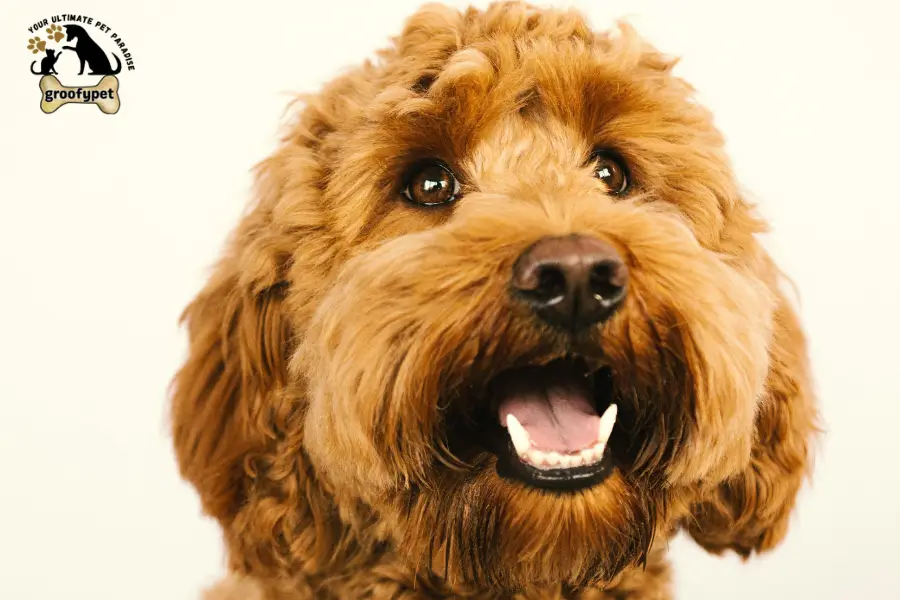
What makes this cut exceptional in summer is not just the length reduction; it is the combined effect of several practical benefits arriving simultaneously. The coat dries within minutes after swimming rather than holding moisture against the skin for hours.
Pollen, allergens, grass seeds, and dirt accumulate far less aggressively in a ¼-inch coat than in a 2-inch one, which means fewer baths, less brushing, and reduced risk of skin irritation from trapped debris. Dogs in high-humidity climates who might otherwise develop hot spots from chronic moisture retention rarely experience that problem after a proper close clip.
One boundary that must be respected regardless of temperature: never shave a Goldendoodle to the skin. Even at ¼ inch, the remaining coat provides a critical UV buffer. Skin that has been completely shaved is vulnerable to sunburn within minutes of direct sun exposure, and the paradoxical effect of full shaving, where the insulating air gap is destroyed rather than thinned, actually increases overheating risk. The close clip threads the needle: short enough to allow genuine airflow and long enough to maintain protective function.
The grooming process in detail:
- Bathe and fully dry the dog before clipping — wet or damp coat causes clipper drag and uneven results
- Use a #5 or #7 blade on the body, working from neck to tail in the direction of hair growth
- Switch to a longer blade or scissors for the face, particularly around the eyes and muzzle
- Trim the ears to a neat, close finish, clearing the interior ear canal opening of excess fur
- Tidy the feet and paw pads, removing fur between the pads entirely to reduce heat retention and debris collection
- Finish with a light application of leave-in conditioner to restore moisture stripped by bathing
- Best for: Active dogs, frequent swimmers, high-humidity climates, owners who want absolute minimum maintenance
- Maintenance level: Low — brushing once or twice weekly, bathing every 2–3 weeks
- Grooming interval: Every 6–8 weeks
- Clipper blade: #5 (standard) or #7 (closer finish)
- Coat types: All types, particularly beneficial for dense curly coats that mat rapidly
2. The Kennel Cut
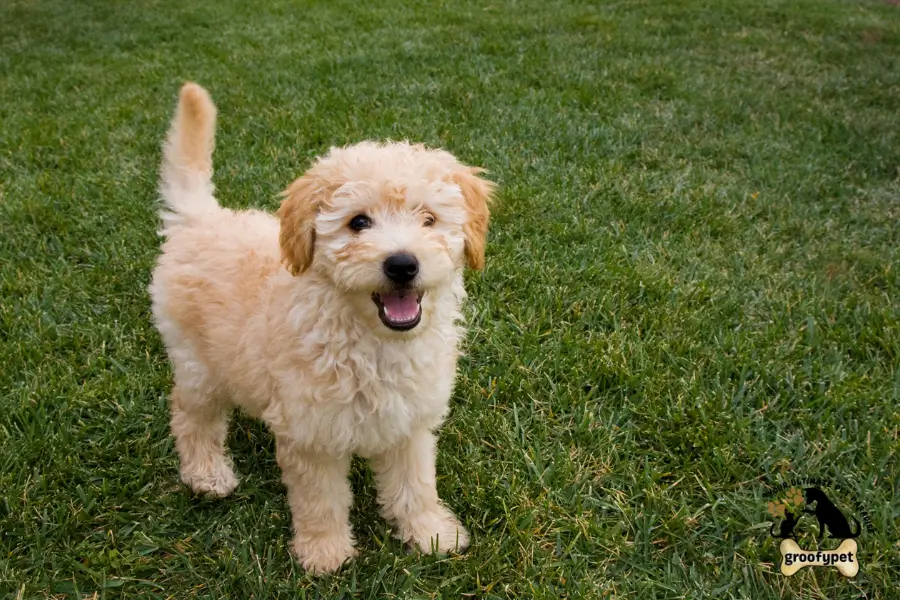
The kennel cut occupies the practical middle ground between a full close clip and a puppy cut. The body is trimmed to approximately one inch using a #4 or #5 clipper blade, longer than the close clip but still short enough to provide meaningful heat relief and significantly reduced maintenance.
The face, ears, and feet receive the same tidy, close finish as the close clip, and the tail is shaped to a neat, consistent length rather than left full. The name is not incidental. This cut became standard at boarding and daycare facilities because it solves a specific set of problems that arise when dogs live and exercise in close proximity to one another.
Longer coats collect more environmental debris, require more individual maintenance attention from staff, and create more friction literally during physical play. The kennel cut’s one-inch finish is clean enough to manage easily but retains enough length to give the dog a polished, well-kept appearance that owners appreciate at pickup.
For summer home use, the kennel cut suits owners who find the close clip a touch too short aesthetically but want to avoid the maintenance demands of longer styles. At one inch, the coat still brushes out quickly, dries reasonably fast after outdoor activity, and offers better airflow than anything above two inches.
It is also one of the most forgiving cuts for groomers who are still developing their doodle-specific technique, since the longer blade length leaves less room for visible clipper lines than the #7 blade used in a full shave-down.
The grooming process in detail:
- Bathe, blow-dry, and fully de-mat the coat before clipping. Mats must be removed before any blade work begins
- Use a #4 blade (leaving approximately ⅜ inch) or #5 blade (approximately ¼ inch) across the full body
- Blend the leg length to match the body or leave legs slightly fuller for a softer transition
- Trim the face with scissors to a rounded, tidy shape no harsh angles
- Clean the ear canal opening and trim ear leather to a neat edge
- Remove all fur between paw pads with small scissors or a #10 blade
- Best for: Boarding dogs, daycare attendees, families wanting low maintenance with a tidier finish than a full shave-down
- Maintenance level: Low to moderate — brushing 2–3 times weekly
- Grooming interval: Every 6–8 weeks
- Clipper blade: #4 or #5
- Coat types: All types
3. The Teddy Bear Cut (Summer Length)
The teddy bear cut is the most recognizable and widely requested Goldendoodle style in North America, and its summer adaptation requires a groomer who understands both the demands of the style and the demands of the season. In the standard version, the body is left at one and a half to two inches.
The summer version pulls that body length back to approximately one inch, close enough for meaningful heat relief while preserving the visual identity of the cut, while the face retains the full, rounded volume that defines the style. The face shaping is where this cut lives or dies. The groomer works with curved scissors to create a continuous, unbroken circular silhouette around the skull and muzzle.
The hair above the eyes is left full enough to frame the face without obstructing vision. The cheeks are rounded outward rather than trimmed flat, giving the face its characteristic plush, three-dimensional softness.
The muzzle is shaped into a rounded cap rather than trimmed close, and there are no hard lines anywhere on the head; every transition is blended. The ears fall naturally alongside the rounded face rather than being shaped independently, and the transition from ear leather to cheek is seamless.
What makes this technically demanding is that the face shaping must be executed entirely freehand with scissors; there is no clipper guide for this work, and the result depends entirely on the groomer’s spatial sense and experience with the breed’s facial structure. A poorly executed teddy bear cut leaves the face looking angular, asymmetrical, or flat. A well-executed one is genuinely striking.
The grooming process in detail:
- Bathe, blow-dry straight (not allowing natural curl or wave to set), and fully de-mat before any cutting begins. Blow-drying straight is essential for accurate length assessment
- Clip the body to approximately one inch using a #4 blade with a comb attachment
- Use curved scissors for all face work. Blade-over-comb or clipper use on the face risks the rounded silhouette
- Round the skull from front to back and the muzzle from all angles, and blend the two shapes into a unified sphere
- Trim the beard—the hair under the chin and jaw are to maintain the rounded muzzle shape without creating a pointed or drooping profile
- Shape the ears to lie flat and natural against the rounded face, trimming any stray length at the ear-leather edge
- Scissor-finish the legs to a rounded, cylindrical shape that blends cleanly into the body’s length
- Trim paw fur and between the pads
- Best for: Owners who prioritize aesthetics and are willing to commit to a consistent grooming schedule
- Maintenance level: Moderate daily brushing of the face coat, full body brushing 3–4 times weekly
- Grooming interval: Every 4–6 weeks in summer; the face coat grows and loses its shape faster than the body
- Clipper blade: #4 with comb attachment for body; scissors only for face
- Coat types: Wavy and loose curly coats; very tight curly coats can be more challenging to shape into a clean sphere
4. The Puppy Cut (Uniform Trim)
The puppy cut’s defining characteristic is its simplicity: every part of the dog is trimmed to the same consistent length, typically between one and one and a half inches. Body, legs, face, tail, ears — all cut to a uniform finish with no deliberate contrast between sections.
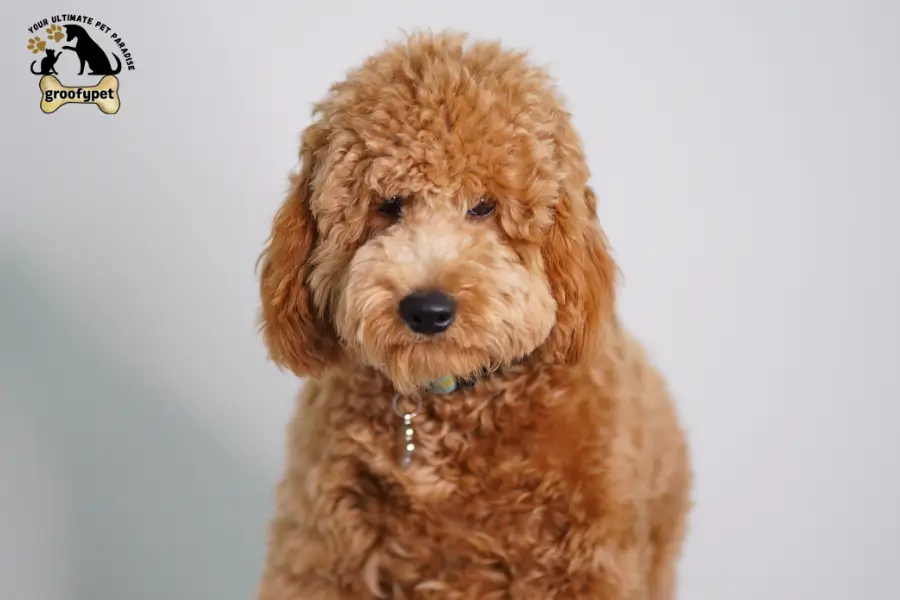
The result is a neat, tidy appearance with a youthful quality that suits Goldendoodles at any age. The name comes not from a requirement that the dog be young, but from the fact that the uniform short coat mimics the appearance of a young puppy whose adult coat has not yet differentiated.
The practical advantages in summer are considerable. Because there is no deliberate contrast between body and leg length, there are no “transition zones” where different blade lengths meet, and transition zones are where uneven growth between appointments becomes most visible.
The uniform length grows out evenly across the entire dog, meaning the cut looks acceptable for longer before it genuinely needs refreshing. For owners who find professional grooming appointments difficult to schedule consistently, that forgiving growth pattern is a genuine asset.
The face in a puppy cut is typically tidied rather than sculpted. Unlike the teddy bear cut’s deliberate spherical shaping, the puppy cut face is simply trimmed to a consistent length matching the body, slightly longer around the muzzle for a soft finish, with the hair above the eyes kept clear of the eyes without dramatic rounding. It is a less expressive face shape but also a far more forgiving one to execute and maintain.
The grooming process in detail:
- Bathe, dry, and de-mat thoroughly before cutting
- Choose a single comb attachment length: a #4 comb (⅜ inch) or #5 comb (¼ inch) for summer; a #3 comb (½ inch) for a slightly longer summer finish
- Work the same attachment consistently across the body, legs, and neck without switching blades
- For the face, use scissors to trim to a length approximately matching the body trim away from the eyes but avoid aggressive rounding
- Trim the ears to a tidy edge that sits naturally without heavy shaping
- Clean between the paw pads and neaten the feet to a rounded finish
- Best for: First-time Goldendoodle owners, families with irregular grooming schedules, even-coated dogs
- Maintenance level: Low to moderate brushing 2–3 times weekly is sufficient for most coat types at this length
- Grooming interval: Every 6–8 weeks
- Clipper blade: #3, #4, or #5 comb attachment, depending on desired length
- Coat types: All types, particularly well-suited to straight and loosely wavy coats
5. The Lamb Cut
The lamb cut is architecturally distinctive among Goldendoodle styles because it is built on deliberate structural contrast rather than uniformity. The body from the base of the neck to the base of the tail and across the chest and belly is clipped very short, typically ½ to ¾ inch, using a #5 or #7 blade.
The legs, by contrast, are left at a fuller length, usually one and a half to two inches, and shaped into clean cylindrical columns that taper gently at the feet. The transition between the shorter body and the fuller legs is blended carefully at the shoulder and hip joints so that no abrupt clipper line is visible.
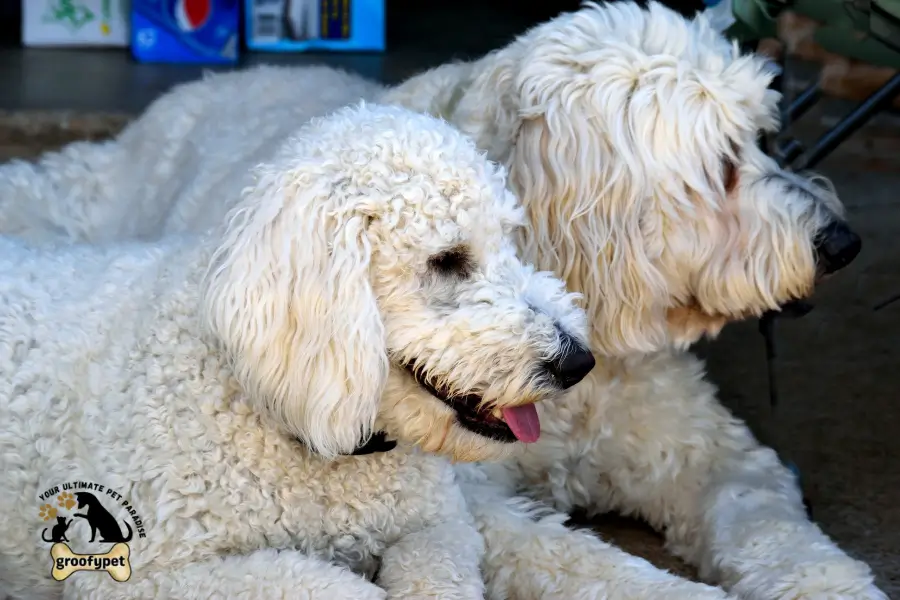
The visual effect is immediately recognizable to anyone familiar with the breed: a close, streamlined torso carried on four distinctly rounded, well-defined legs. The proportions evoke a clean, architectural quality that makes the lamb cut one of the most photogenic styles available.
At a dog park or on a walk, a well-executed lamb cut draws consistent attention; the contrast reads as deliberate and polished rather than accidental.
Functionally, the short body clip delivers meaningful heat relief to the areas where Goldendoodles retain the most body heat: the back, flanks, chest, and belly. The longer legs do not contribute significantly to heat retention since they contain less core body mass.
However, the leg coat is the maintenance liability at one and a half to two inches; it picks up grass seeds, burrs, and debris readily, tangles after swimming, and requires more frequent brushing than the body. Owners who live in areas with dense vegetation or who walk through tall grass regularly need to account for daily leg brushing to keep the cut looking intentional.
The grooming process in detail:
- Bathe, blow-dry straight, and de-mat fully, paying particular attention to the leg coat, which mats fastest
- Clip the body, chest, and belly to ½ inch using a #5 or #7 blade; keep blade flat against the body for an even finish
- Leave the legs significantly longer; scissor-finish to a cylindrical shape, working from the paw upward
- Blend the transition at the elbow and stifle (knee) joints carefully; this is the most technically demanding part of the cut
- Shape the feet to a rounded, cat-foot profile: trim the toes together and remove fur from between the pads
- Trim the face to a clean, rounded finish that complements the structured body; the face should look polished, not wild
- Shape the tail to a full, rounded plume proportionate to the body
- Best for: Owners who want a structured, photogenic look with genuine summer heat relief
- Maintenance level: Moderate The leg coat requires brushing every 1–2 days, particularly after outdoor activity
- Grooming interval: Every 5–6 weeks; the contrast between body and leg length becomes less defined as the body coat grows
- Clipper blade: #5 or #7 for body; scissors for legs and blending
- Coat types: Wavy and curly; very straight coats may not hold the rounded leg column shape as cleanly
6. The Lion Cut
The lion cut is the most structurally dramatic style on this list, and it carries genuine functional reasoning behind its theatrical appearance. The concept divides the dog into two distinct zones: a full, voluminous front half (the chest, shoulders, neck, and head) and a closely clipped rear half (the flanks, abdomen, hindquarters, and all four legs from mid-thigh downward).
A deliberately shaped pom-pom at the tail tip and, in some interpretations, small pom-poms above each ankle (the “bracelets”) complete the silhouette.
The functional logic is rooted in the working history of retrieving breeds. The full chest coat protects the vital organs, heart and lungs, from cold water and direct impact, while the clipped hindquarters reduce drag during swimming and allow faster drying.
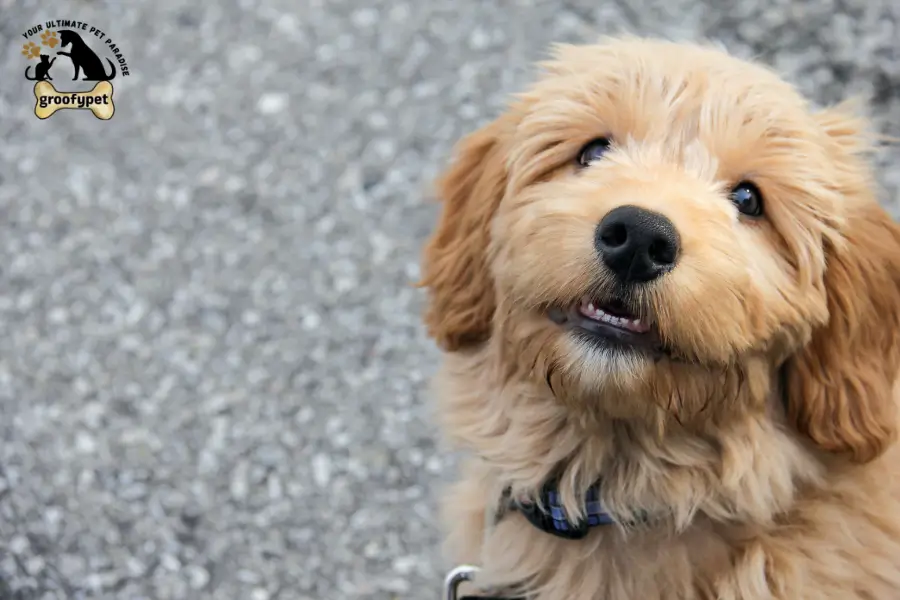
For summer, the benefit inverts: the clipped rear and flanks provide aggressive heat relief to the areas where Goldendoodles carry significant muscle mass and where blood flow and, therefore, heat generation are highest during exercise. The fuller chest and face retain enough coat to prevent sunburn on the dog’s most exposed surfaces.
Executing the lion cut well requires a groomer with strong spatial awareness and experience with dramatic contrast cuts. The transition between the full mane and the clipped body needs to be placed precisely at the shoulder.
Too far back and the mane looks small and out of proportion; too far forward and it merges with the leg coat in a way that reads as a mistake rather than intention. The pom-poms, if included, must be shaped symmetrically and sized proportionately to the dog’s overall frame.
The grooming process in detail:
- Bathe, blow-dry fully, and de-mat before beginning the mane coat in particular must be completely free of tangles before shaping
- Establish the mane boundary first by marking the shoulder point with a comb; this line runs roughly at the point where the leg meets the body on all four sides
- Clip the entire rear section — flanks, abdomen, hindquarters, and upper legs — with a #7 or #10 blade for a very close finish
- Leave the lower legs (from mid-thigh / mid-foreleg downward) at a fuller length and shape into rounded pom-poms or bracelets if desired
- Shape the mane with curved scissors, blending into the clipped shoulder line without a hard edge
- Shape the head into a full, rounded shape — similar to a teddy bear face but with more overall volume
- Shape the tail pom-pom last, trimming to a clean sphere and scissoring any stray length
- Best for: Bold, confident owners; dogs with a strong, broad chest and good shoulder structure that supports the mane visually
- Maintenance level: Moderate — the mane requires brushing every 1–2 days; the clipped rear requires minimal attention
- Grooming interval: Every 5–6 weeks; the mane grows faster than the clipped rear and loses its boundary definition
- Clipper blade: #7 or #10 for rear; scissors for mane shaping and pom-poms
- Coat types: All types; curly and wavy coats hold the rounded mane shape better than straight coats
7. The Mohawk Cut
The mohawk cut is the most playful and personality-forward style on this list, and it executes its concept with genuine grooming precision rather than novelty alone. The entire body, sides, chest, belly, flanks, and legs are clipped very short using a #7 blade.
A deliberate strip of longer coat, typically one to two inches wide, is left running from the base of the skull along the dorsal midline (the center of the back) all the way to the base of the tail. This strip is scissor-trimmed to a consistent length, usually one to two inches, and shaped so that it stands upright or fans naturally depending on the coat’s texture, creating the characteristic raised ridge.
The practical benefits in hot weather are identical to those of a close clip for roughly 90% of the dog’s surface area. The mohawk strip itself adds negligible heat retention; it is too narrow and too short to trap meaningful warmth, but it eliminates the flat, unremarkable appearance that some owners find uninspiring about a standard shave-down.
The result is a dog that is functionally cool, requires minimal maintenance, and generates more second glances per walk than almost any other cut on this list.
Coat texture matters significantly for the visual result. On wavy coats, the strip tends to stand upright naturally along the spine, creating the classic raised mohawk silhouette. On tightly curly coats, the strip may coil rather than stand, giving a different but still distinctive effect more of a textured ridge than an upright crest.
On straight coats, the strip may lie flat unless the groomer uses a light-hold product to encourage lift. Discuss the likely result with your groomer given your dog’s specific coat before committing.
The grooming process in detail:
- Bathe, blow-dry, and de-mat before any clipper work
- Mark the mohawk strip with two parallel comb lines running the length of the spine before clipping this ensures symmetry
- Clip the entire body outside the marked strip using a #7 blade, working from the marked lines outward on each side
- Trim the strip with scissors to a consistent length, working from base to tip of each section
- Blend the edges where the strip meets the clipped sides so the transition is gradual rather than a hard wall
- Clip the face to a clean, tidy finish that complements the dramatic body; a very full face would compete with the mohawk visually
- Neaten the ears, feet, and paw pads
- Best for: Owners who want a statement style with summer functionality; dogs with strong, even coat growth along the spine
- Maintenance level: Low for the body; the strip requires brushing every few days to prevent the limited coat from tangling
- Grooming interval: Every 6–8 weeks
- Clipper blade: #7 for body; scissors for the strip
- Coat types: Wavy (best visual result); loosely curly (good result); very tightly curly or straight (acceptable with proper technique)
8. The Beach Wave Cut
The beach wave cut is less a defined cut style and more a grooming philosophy, one that treats the Goldendoodle’s natural coat texture as an asset rather than a variable to be standardized away. Where most summer cuts rely on clipper work to achieve length reduction.
The beach wave cut uses scissors throughout, working section by section to trim the coat to a medium length of approximately one to one and a half inches while leaving the natural wave or loose curl pattern intact and undisturbed.
The distinction between scissor-finish and clipper-finish is not merely technical; it produces a meaningfully different visual result. Clippers cut each hair to a precise, uniform length, which creates a flat, dense surface texture at the coat’s edge.
Scissors used with a point-cutting or slide-cutting technique leave the hair ends with slightly varying lengths, which allows the coat’s natural texture to continue expressing itself at the surface. On a wavy Goldendoodle, the result is a coat that moves and falls in relaxed waves rather than sitting in a uniform mat.
The dog looks effortlessly well-groomed rather than freshly clipped. This cut is genuinely seasonal in character. In early summer it reads as soft and natural. By mid-summer, as the coat grows approximately half an inch, the waves become more pronounced, and the overall look actually improves.
By late summer, the coat is ready for refreshing, but the eight to ten weeks between the initial cut and the need for a reappointment are weeks during which the dog consistently looks good. That growth-tolerant quality makes the beach wave cut one of the most practical aesthetic choices for owners with unpredictable scheduling.
The grooming process in detail:
- Bathe with a moisturizing shampoo and conditioner; allow the coat to dry with minimal blow-drying tension to let the natural wave pattern establish itself
- Work in sections from the rear forward, using straight or curved scissors to trim each section to the target length
- Use point-cutting (snipping into the ends at an angle rather than straight across) throughout to preserve texture and avoid blunt edges
- Avoid any clipper work on the body — the moment a blade replaces scissors, the wave texture is overridden
- Trim the face with scissors to a soft, natural shape; avoid aggressive rounding that would contrast with the relaxed body texture
- Shape the legs to a tapered finish that matches the body length
- Apply leave-in conditioner after the cut to enhance wave definition and protect the coat from sun drying
- Best for: Wavy-coated Goldendoodles; owners who prefer an effortless, natural aesthetic over a sculpted look
- Maintenance level: Moderate — the wave pattern requires brushing with a wide-tooth comb (not a slicker brush, which can disrupt the pattern) every two to three days
- Grooming interval: Every 8–10 weeks — this cut’s greatest advantage
- Tools: Scissors throughout; no clipper work on the body
- Coat types: Wavy (ideal); loose curly (good); straight coats do not produce a wave pattern and will simply read as a standard scissor trim
9. The Poodle-Inspired Continental Clip
The continental clip is the most architecturally complex cut available to Goldendoodle owners and the one that demands the highest level of grooming expertise to execute. Its origins are functional rather than aesthetic: the traditional continental clip was developed for retrieving water dogs, where close-clipped hindquarters reduced hydrodynamic drag during water entry and retrieval.
While the fuller chest coat and strategically placed leg braces protected the dog’s vital organs and joints from cold water shock. The summer adaptation preserves this structural logic while reducing overall coat volume.In the summer continental clip, the hindquarters and flanks are clipped very short, typically with a #7 or #10 blade, exposing the hip structure clearly.
The rear legs are fully clipped from the hip to just above the ankle, where a neat, rounded pom-pom bracelet is left on each leg. The midsection and abdomen are clipped close as well. The chest and shoulder area retain more coat, creating a defined chest mane.
The head is shaped into a full, rounded topknot. The front legs are either fully clipped with ankle bracelets matching the rear or left at a medium length and scissor-finished depending on the specific interpretation. The tail is clipped to the base with a shaped pom-pom at the tip.
The visual result is extraordinary when executed well: a dog that looks simultaneously athletic and ornate, with precise geometric shapes at each ankle bracelet and tail pom-pom balanced against the flowing chest and head coat.
Achieving this requires a groomer with advanced training and significant experience; the pom-poms must be shaped into true spheres, sized proportionately to the dog’s frame, and positioned correctly on the leg. Asymmetry in any one of four ankle bracelets undermines the entire composition.
The grooming process in detail:
- Bathe, blow-dry completely straight, and fully de-mat before any work begins the head and chest coat requires thorough preparation
- Clip the hindquarters, rear legs (above the bracelet point), flanks, and abdomen first with a #7 or #10 blade
- Mark the bracelet points on all four legs — these should fall at the same anatomical landmark (above the ankle joint) on each leg
- Clip below the bracelet mark to the paw, leaving a band of unclipped coat at the bracelet point
- Shape each bracelet into a clean sphere using curved scissors, rotating the leg to work from all angles
- Clip the midsection, working carefully at the chest boundary to create a clean, defined line where the chest coat begins
- Shape the chest coat and topknot with curved scissors; the topknot should be a clean, upright sphere balanced above the face
- Shape the tail pom-pom last — it should be proportionately smaller than the bracelets given the tail’s thinner profile
- Best for: Owners committed to a show-inspired aesthetic who work with an experienced, doodle-specialist groomer
- Maintenance level: High the topknot and chest coat require daily brushing; bracelets require brushing every two days to maintain their shape
- Grooming interval: Every 4 weeks without exception, the contrast between clipped and unclipped sections loses definition rapidly
- Clipper blade: #7 or #10 for clipped sections; scissors for all shaped sections
- Coat types: Curly coats hold the pom-pom shape most reliably; wavy coats work well; straight coats are less suitable as they do not hold the rounded shapes
10. The Topknot Summer Cut
The topknot cut combines two functionally opposite grooming approaches within a single style: the body receives a close clip for maximum summer heat relief, while the crown of the head is deliberately left long and gathered or allowed to fall forward, creating a voluminous, expressive topknot that immediately draws the eye.
The contrast between the practical body and the expressive head creates a style that reads simultaneously as functional and adorable. The topknot itself is the defining element of the cut, and it requires consistent daily attention to look intentional.
The hair on the crown and top of the skull is left long, typically two to three inches, while the sides of the face, beard, and ears are trimmed shorter to throw the crown coat into relief. The topknot can be worn in several ways depending on owner preference and the dog’s facial structure:
- The gathered topknot—the crown hair is lightly secured with a small, soft fabric band (never a tight rubber band, which causes breakage) into a rounded bundle above the skull. This style is the most visually striking but requires daily re-securing.
- The forward fall—the crown hair is left unsecured and combed or brushed forward over the forehead, creating a casual curtain fringe. Easier to maintain than the gathered version but requires trimming to keep hair clear of the eyes.
- The natural drape—the crown coat is left at a length that falls naturally to the sides, framing the face without any gathering or deliberate styling. The most maintenance-friendly version of the topknot family.
Regardless of the topknot style chosen, the bodywork follows close-clip principles—a #5 or #7 blade run uniformly across the body, with the face sides, beard, and ears scissor-trimmed to a neat finish that emphasizes the topknot’s volume through contrast.
The transition between the full crown coat and the shorter face sides needs careful blending so the topknot appears to rise naturally from the skull rather than sitting on it like a separate attachment.
The grooming process in detail:
- Bathe and blow-dry; the crown coat should be blow-dried upward to assess its true length before any trimming
- Clip the body, sides of the face, beard area, and ears with a #5 or #7 blade
- Leave all crown coat intact; do not apply any blade to the top of the skull
- Scissor-trim the crown coat to a consistent length across the full topknot area, removing any uneven growth
- Blend the transition between the topknot and the shorter face sides with curved scissors, working in small increments
- Trim ear leather edges neatly; the ears should frame the face cleanly without competing with the topknot
- If gathered topknot is desired, section the crown coat with a fine comb, gather without tension, and secure with a snag-free band
- Clean paw pads and neaten feet
- Best for: Dogs with expressive, symmetrical faces and strong crown coat density; owners who enjoy a small daily styling ritual
- Maintenance level: Low for the body; moderate for the topknot, daily brushing of the crown coat and re-securing if gathered
- Grooming interval: Every 6–8 weeks for the body; the topknot itself may need scissor trimming every 4–5 weeks if kept at a consistent length
- Clipper blade: #5 or #7 for body; scissors for topknot shaping and face blending
- Coat types: All types; wavy and curly coats hold the topknot’s volume most naturally; straight coats work but may produce a flatter, less dramatic crown
Quick Comparison: Which Summer Cut Is Right for Your Dog?
| Cut Style | Heat Relief | Maintenance | Best Coat Type | Wow Factor |
|---|---|---|---|---|
| Close Clip | ★★★★★ | ★☆☆☆☆ | All types | ★★☆☆☆ |
| Kennel Cut | ★★★★☆ | ★★☆☆☆ | All types | ★★☆☆☆ |
| Teddy Bear Cut | ★★★☆☆ | ★★★☆☆ | Wavy / loose curly | ★★★★★ |
| Puppy Cut | ★★★★☆ | ★★☆☆☆ | All types | ★★★☆☆ |
| Lamb Cut | ★★★★☆ | ★★★☆☆ | Wavy / curly | ★★★★☆ |
| Lion Cut | ★★★★★ | ★★★☆☆ | All types | ★★★★★ |
| Mohawk Cut | ★★★★★ | ★★☆☆☆ | Wavy | ★★★★☆ |
| Beach Wave Cut | ★★★☆☆ | ★★★☆☆ | Wavy | ★★★★☆ |
| Continental Clip | ★★★★☆ | ★★★★★ | Curly | ★★★★★ |
| Topknot Cut | ★★★★★ | ★★★☆☆ | All types | ★★★★☆ |
Final Thoughts
The Goldendoodle summer haircut is not a single fixed style; it is a set of considered decisions shaped by your dog’s coat type, activity level, local climate, and individual health needs. Whether you choose the close comfort of a #7 blade summer cut, the balanced proportions of a lamb cut, or the enduring popularity of the teddy bear cut, the underlying principles are the same.
Reduce heat retention, protect the skin, and commit to a maintenance routine that keeps the coat healthy between appointments. Pair a well-timed cut with consistent brushing, strategic outdoor timing, reliable hydration, and awareness of overheating warning signs, and your Goldendoodle is positioned to move through summer in genuine comfort, coat intact, skin protected, and energy undiminished by the heat.
Rough Coated Collie: The Majestic, Loyal, and Intelligent Companion
Dog Grooming Terms At Home: Essential Care for Your Beloved Pet